18 Lead Generation Tools Worth Paying For in 2026 — 1,300/mo
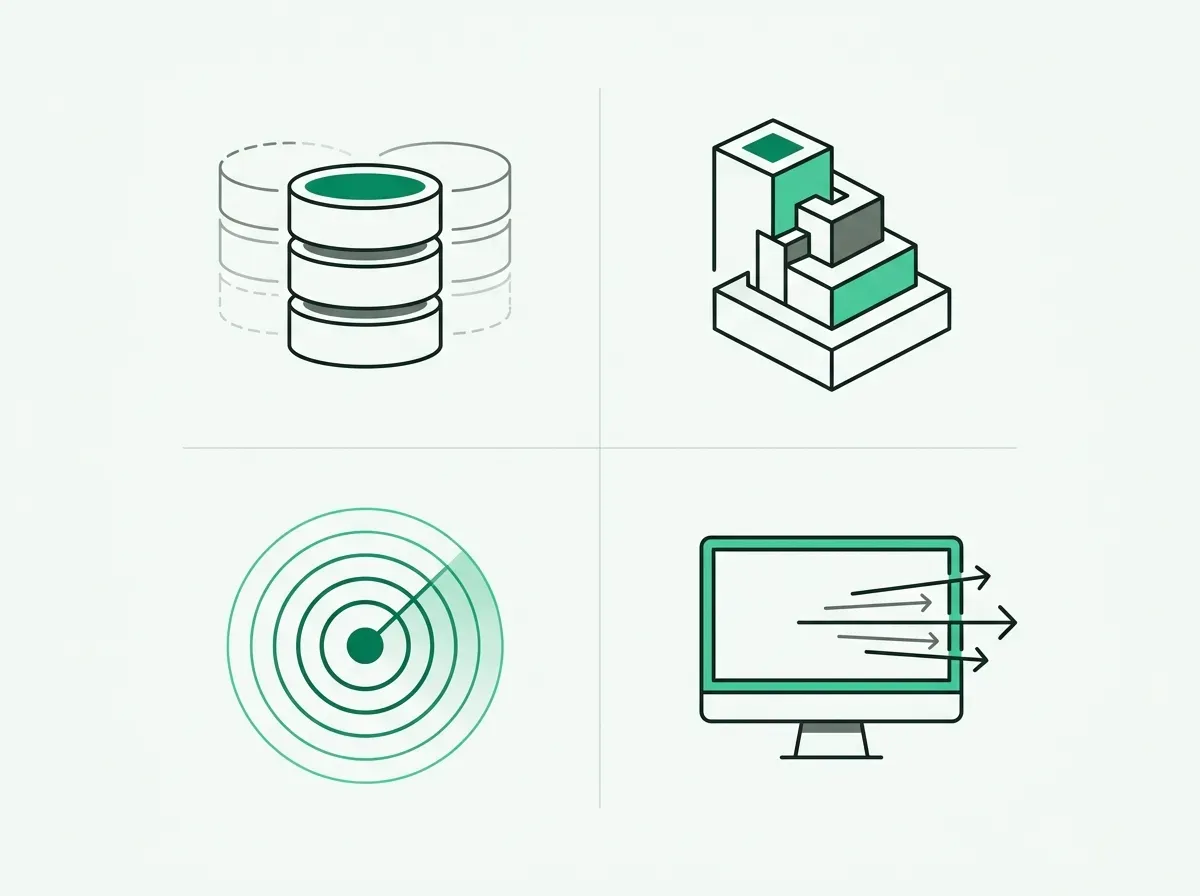
Lead generation tools divide into four operational architectures: static contact databases, cloud enrichment waterfalls, deanonymization monitors, and browser-native intent agents. Selecting modern software requires evaluating credit burn, record decay rates, and whether an output record carries primary-source evidence. At Drevon, we built our free Mac desktop application to conduct verifiable prospect discovery directly in your local browser without charging data markups or credit fees.
- Static contact databases decay rapidly: B2B contact lists lose 22.5% to 30% of their accuracy annually due to job mobility, making static phone and email lists unreliable over time.
- Credit pricing models penalize exploratory filtering: Multi-vendor waterfall tools charge credits for each failed lookup step, driving up customer acquisition costs.
- Local browser agents access unindexed intent: Running AI agents locally across LinkedIn, Reddit, and job boards surfaces fresh buyer demand without API restrictions or IP bans.
- Evidence verification prevents hallucinated qualification: Outbound pipelines perform best when every prospect claim links directly to a verifiable live URL.
The four architectures of modern lead generation
Modern lead generation tools separate into four technical architectures: static contact directories, cloud enrichment waterfalls, first-party intent monitors, and local browser-native agents. Understanding how these systems query data explains why credit bills escalate and why outbound messaging frequently targets stale prospects.
Static databases store scraped emails and phone numbers in centralized tables. Because workers change jobs frequently, these records suffer an annual decay rate between 22.5% and 30% according to SiriusDecisions and Dun & Bradstreet data. As explored in our analysis of why B2B data decays by over 30% annually, static data providers force teams to pay for decaying records that bounce upon delivery.
Cloud enrichment platforms orchestrate multi-vendor cascades to fill missing fields. While effective for bulk matching, their economics rely on per-credit billing. When a cascade queries four providers to find a direct dial, you pay for each API ping regardless of match accuracy. Our analysis of how credit-based pricing models penalize discovery shows that this structure discourages exploratory research. Local browser agents bypass these centralized databases entirely by executing queries inside your live browser session, returning evidence-based prospecting records with verifiable source URLs.
Local browser agents and primary-source intent discovery
Browser-native tools run discovery agents on your desktop machine, reading live web pages through your authenticated accounts. This architecture accesses real-time buying signals inside member-only networks and niche communities without third-party data markups.
1. Drevon
Drevon is a free desktop application for macOS (supporting Apple Silicon and Intel) designed for GTM engineers, founders, and sales teams. Instead of charging subscription fees or selling contact credits, Drevon executes AI agents inside your own browser using your existing logins. The software connects directly to the AI subscriptions you already maintain, such as Claude Code, OpenAI Codex, GitHub Copilot, or Google Gemini.
Because Drevon runs locally, it queries member-only platforms like LinkedIn, Reddit, Crunchbase, and niche hiring boards without risking shared proxy IP bans. As we detail in our guide on how we find B2B buying signals on Reddit, public discussions and hiring sprees represent high-intent purchase indicators that static lists miss. Every row exported to CSV or Markdown contains a direct source link confirming the finding, aligning with the principles outlined in why Drevon runs on your desktop, not in the cloud.
Cloud enrichment engines and waterfall orchestrators
Cloud enrichment platforms connect multiple data vendors through spreadsheet-style workflows. These systems allow growth engineers to automate multi-step verification and firmographic scoring across broad company lists.

2. Clay
Clay provides a cloud-based table interface that chains over 50 data providers into automated enrichment waterfalls. It excels at bulk domain enrichment, firmographic scoring, and multi-source email validation.
According to the official Clay plans and billing documentation, the platform moved to a dual-currency system separating Data Credits from Actions. As noted in independent analyses like the SaaS Blueprints Clay breakdown, the entry paid Launch plan starts at $185 per month ($167 per month billed annually) for 2,500 Data Credits and 15,000 Actions (checked August 2026). While powerful for bulk tabular jobs, failed cascade attempts consume Actions, making exploratory discovery expensive compared to local browser research. We break down these differences in our comparison of Clay vs. Drevon: data enrichment vs. intent discovery.
3. Deepline
Deepline delivers a unified API runtime for GTM engineers who build programmatic prospecting workflows in code. It aggregates dozens of data integrations under a single billing interface, allowing technical teams to trigger custom waterfalls from their own terminal scripts or backend services.
Deepline is ideal for engineering teams standardizing data ingestion pipelines across internal apps. However, it requires technical maintenance to write and maintain data transformation logic, and charges on a per-API-call basis.
4. Bardeen
Bardeen operates as a browser extension automation tool that captures structured data from active tabs and routes it directly into CRMs and Google Sheets. It removes repetitive copy-paste tasks for individual sales reps conducting manual research across LinkedIn and company websites.
While accessible for non-technical users, Bardeen relies on visible DOM scraping routines that break when target websites update their frontend code. We evaluated these workflow trade-offs in our hands-on review of Clay, Apollo, and Bardeen.
Contact databases and identity graphs
Centralized contact databases remain the standard starting point for broad total addressable market (TAM) list building. They provide large indexes of corporate email addresses, direct-dial phone numbers, and basic firmographics.
5. Apollo.io
Apollo.io maintains an extensive B2B contact directory coupled with native sequence automation, dialers, and pipeline tracking. It is a cost-effective option for early-stage teams requiring baseline email coverage.
As documented in breakdowns of Apollo pricing tiers and Apollo review data, entry-level paid access on the Basic plan runs $49 per user per month billed annually ($59 billed monthly, checked August 2026). The plan includes uncapped email credits but limits mobile numbers by charging 8 mobile credits per contact. Users should note that shared static pools suffer from the data decay rates detailed in our analysis of where your prospect data goes across Apollo, Clay, and ZoomInfo.
6. ZoomInfo (SalesOS)
ZoomInfo is an enterprise-grade sales intelligence platform offering deep org charts, corporate hierarchy mapping, and historical buying signals. It provides extensive coverage for mid-market and enterprise North American companies.
ZoomInfo operates exclusively via annual contracts. Entry-level SalesOS Professional packages generally start between $14,995 and $18,000 per year with a mandatory 3-seat minimum (checked August 2026). Overages range from $0.50 to $1.50 per credit, and unused credits expire at contract renewal. ZoomInfo fits established enterprise sales teams with substantial software budgets.
7. Cognism
Cognism focuses on high-accuracy direct-dial mobile data and strict international regulatory compliance. Its Diamond Data service provides phone-verified mobile numbers across European and North American accounts.
Pricing details documented in Cognism market benchmarks show entry Standard contracts ranging from $15,000 to $18,000 per year, with advanced Diamond plans pricing at $25,000 to $35,000 annually (checked August 2026). Standard platform exports are capped at 25 contacts at a time unless teams buy additional bulk export packages. Cognism is best suited for outbound teams cold-calling European prospects under strict privacy rules.
8. Lusha
Lusha provides a lightweight browser extension that reveals direct-dial numbers and corporate emails as reps browse LinkedIn profiles. It offers an intuitive interface for individual sales reps needing on-demand contact lookups without configuring complex API integrations.
While easy to adopt, per-credit costs rise quickly if entire teams pull large lead volumes, and its coverage is thinner for niche international markets.
9. Clearbit (HubSpot Breeze)
Clearbit, now integrated into HubSpot's Breeze intelligence suite, automates company-level firmographic enrichment and intent scoring inside HubSpot CRM. It automatically enriches inbound form submissions with company headcount, tech stack, and annual revenue estimates.
Clearbit excels at cleaning inbound CRM databases. For outbound prospecting, however, it functions primarily as a company-level metadata layer rather than a direct personal intent discovery engine.
Deanonymization and first-party intent monitors
Deanonymization platforms track visitors on your website and attempt to match dynamic IP addresses and browser fingerprints to known business profiles, alerting sales teams to active interest.

10. RB2B
RB2B captures person-level visitor profiles from website traffic, pushing identified US LinkedIn profiles directly into Slack channels in real time. It offers a generous free tier for US desktop traffic identification.
Teams deploying deanonymization scripts must navigate strict regulatory requirements. As outlined in European analytics compliance guides on ePrivacy Directive national implementations, Article 5(3) of Directive 2002/58/EC and EDPB Guidelines 2/2023 mandate explicit opt-in consent before executing identification pixels on EU users. Consequently, RB2B geofences person-level tracking to US traffic to avoid GDPR breaches, a distinction we explore in our guide to GDPR-compliant lead research.
11. Warmly
Warmly combines website visitor deanonymization with automated orchestration, triggering instant chat prompts, video greetings, and automated LinkedIn connection requests when target accounts visit your site.
It provides an all-in-one engagement layer for pipeline generation. However, match rates depend on total website traffic volume, and residential IP traffic from remote workers frequently fails to resolve to corporate domains.
12. Common Room
Common Room captures product and community intent signals across GitHub, Discord, Slack, Discourse, and social channels, consolidating user interactions into unified customer profiles. It helps growth teams identify open-source developers and product champions showing active buying interest.
The platform is ideal for developer tooling and product-led growth companies. For standard B2B services lacking active community forums, the data volume is more limited.
13. UserGems
UserGems monitors your customer base and tracks previous buyers and champions as they transition to new companies. It surfaces high-converting warm leads by notifying sales reps whenever an alumnus joins a target account.
Because past buyers carry built-in trust, champion tracking delivers above-average conversion rates. The platform relies on your existing customer volume to generate alerts, making it less useful for early-stage companies without an established customer base.
Autonomous AI SDRs and multichannel outbound platforms
Autonomous AI SDRs combine contact discovery, email personalization, and sequence execution into automated agents designed to operate without manual sales rep intervention.
14. Nex
Nex positions itself as an autonomous AI GTM engineer that integrates directly with your CRM, Slack, and email communications. It builds an internal knowledge graph of company context to autonomously coordinate outbound campaigns and pipeline operations.
Nex aims to replace GTM engineering hours through automation. In contrast, tools like Drevon empower technical teams to build verifiable prospect lists directly. We outline the technical foundation for this role in what is a GTM engineer.
15. 11x
11x builds digital AI workers, such as Alice for outbound multichannel prospecting and Jordan for automated phone calls. Its platform manages secondary domains, automated inbox warmup, and personalized email outreach sequences.
Procurement data indicates 11x operates under 12-month commitments starting at $3,000 to $3,750 per month ($36,000 to $45,000 per year, checked August 2026) with volume caps around 2,000 to 3,000 contacted leads per month. Organizations must weigh the substantial contract cost against the risk of unverified AI-generated messaging reaching key accounts.
16. Artisan
Artisan provides an AI sales agent named Ava that consolidates an internal 300-million contact database, mailbox warmup infrastructure, and automated email drafting into a single console. The platform includes native deliverability guardrails and reply classification.
Standard Accelerate tiers typically run between $1,500 and $3,000 per month ($18,000 to $36,000 per year, checked August 2026), covering approximately 12,000 contacted leads annually. Phone dialer access requires an additional $75 monthly fee per seat.
17. Smartlead
Smartlead provides dedicated cold email infrastructure with unlimited mailbox connections, automated warmup pools, and centralized master inbox management. It is designed for outbound agencies and growth teams sending high email volumes across multiple secondary domains.
Smartlead provides reliable email deliverability tools, but requires you to import your own validated lead lists and messaging copy.
18. Instantly
Instantly provides scalable email warmup, sequence automation, and a built-in contact database. Its flat-rate pricing for unlimited email accounts makes it a popular choice for growth teams managing high-volume outbound campaigns.
While Instantly simplifies cold email mechanics, teams must independently verify lead data freshness to prevent deliverability issues caused by high bounce rates.
Comparison matrix: Pricing models, data freshness, and architecture
The following table summarizes all 18 lead generation tools across their deployment architecture, pricing model, primary data source, and evidence verification mechanisms.
| Tool | Architecture | Pricing Model | Primary Data Source | Evidence Source URL |
|---|---|---|---|---|
| Drevon | Local Mac Desktop App | Free (BYO AI Key) | Live Browser (LinkedIn, Reddit, Web) | Yes (Every record) |
| Clay | Cloud Enrichment Table | Usage Credits ($185/mo+) | 50+ Vendor Waterfall Aggregation | No (Third-party match) |
| Deepline | Unified GTM API | Per-API Request | Aggregated Partner Network | No (API payload) |
| Bardeen | Browser Extension | Monthly Subscription | Active DOM Tab Scraping | No (Direct capture) |
| Apollo.io | Contact Database / Sequencer | Per-Seat + Credits ($49/mo+) | Centralized Web Directory | No (Static profile) |
| ZoomInfo | Enterprise Intelligence Graph | Annual Contract ($15k/yr+) | Proprietary Crawler Database | No (Vendor score) |
| Cognism | Compliance Contact Directory | Annual Contract ($15k/yr+) | Phone-Verified Directory | No (Phone check) |
| Lusha | Chrome Extension Lookup | Per-User / Credit Pool | Centralized B2B Database | No (Directory match) |
| Clearbit | CRM Enrichment Engine | Platform Tier / Volume | Corporate Web Firmographics | No (Domain match) |
| RB2B | Visitor Deanonymization | Freemium / US Profile Fee | Third-Party Identity Graph | No (Probabilistic match) |
| Warmly | Website Signal Orchestration | Monthly SaaS Tier | Reverse IP / Identity Graph | No (IP lookup) |
| Common Room | Community Intelligence | Tiered Platform Contract | GitHub, Discord, Slack APIs | Yes (Community event) |
| UserGems | Champion Job-Change Tracker | Annual Platform Tier | Public Career Moves Monitoring | Yes (Career update) |
| Nex | Autonomous AI GTM Agent | Annual Enterprise SaaS | Internal CRM / Knowledge Graph | No (Internal graph) |
| 11x | Digital AI Worker (Alice) | Annual Contract ($36k/yr+) | Proprietary Enrichment Waterfall | No (Autonomous list) |
| Artisan | AI BDR Platform (Ava) | Annual Contract ($7.2k-$18k/yr) | 300M+ Contact Directory | No (Native table) |
| Smartlead | Cold Email Infrastructure | Flat Monthly Tier | User-Supplied Lead CSVs | N/A (Sender tool) |
| Instantly | Email Warmup & Delivery | Flat Monthly Tier | Native Contact Database Add-on | N/A (Sender tool) |
Relying on multiple single-purpose tools introduces an integration tax that inflates software spend. When you chain a static database, a waterfall enrichment tool, and an outbound sequencer, you pay for data transfers, API integrations, and overlapping contact credits. Choosing a local browser agent like Drevon combined with standard email infrastructure reduces pipeline costs while ensuring every prospect is validated against live web data.
Frequently Asked Questions
What is the best tool for B2B lead generation?
The best tool depends on your team structure and technical requirements. For broad list building, Apollo.io offers an affordable contact database. For programmatic multi-vendor enrichment, Clay is an industry standard. For sales engineers who require verifiable intent data with source links and no credit markups, Drevon provides a free, browser-native research environment.
How do AI agents compare to traditional contact databases in prospect qualification?
Traditional databases query static indexes that decay by 22.5% to 30% annually, often returning outdated contact details. In contrast, local AI agents inspect live web pages in real time, validating hiring trends, recent LinkedIn activity, and community discussions before qualifying an account.
How do GTM teams avoid data decay when building target account lists?
Teams avoid data decay by replacing cached databases with primary-source research. Querying live browser data directly from LinkedIn, Reddit, and corporate careers pages ensures company attributes, hiring needs, and employee roles are accurate at the time of outreach.
How do browser-based agents access private communities without API access?
Browser-based agents like Drevon run locally on your desktop machine, utilizing your existing browser sessions and authenticated logins. This allows the software to navigate member-only groups and professional networks naturally without triggering the proxy IP blocks associated with cloud scrapers.
To start researching prospects using primary-source browser intelligence without credit fees or data markups, download Drevon for macOS for free today.