22 GTM Tools, Sorted by the Job They Do — 640/mo; gtm.ai sits at position 34 here
TL;DR
- Most modern sales stacks suffer from redundant vendor seats because teams purchase by platform category rather than the specific operational job required.
- A functional revenue stack separates into five discrete jobs: Intent Discovery, Waterfall Enrichment, Contact Intelligence, Agent Orchestration, and Outbound Execution.
- Cloud enrichment platforms like Clay charge dual-currency markups for data and actions, while local browser agents like Drevon discover verified intent signals without consuming query credits.
- Static contact databases decay at roughly 22.5% to 30% annually, making live web research essential before pushing records into sequencing engines.
Evaluating modern Drevon prospecting workflows reveals that go-to-market teams frequently pay three separate subscriptions for identical contact records. You can download the free Mac desktop application to conduct primary research locally, eliminating redundant platform fees and validating live signals before enrichment runs.
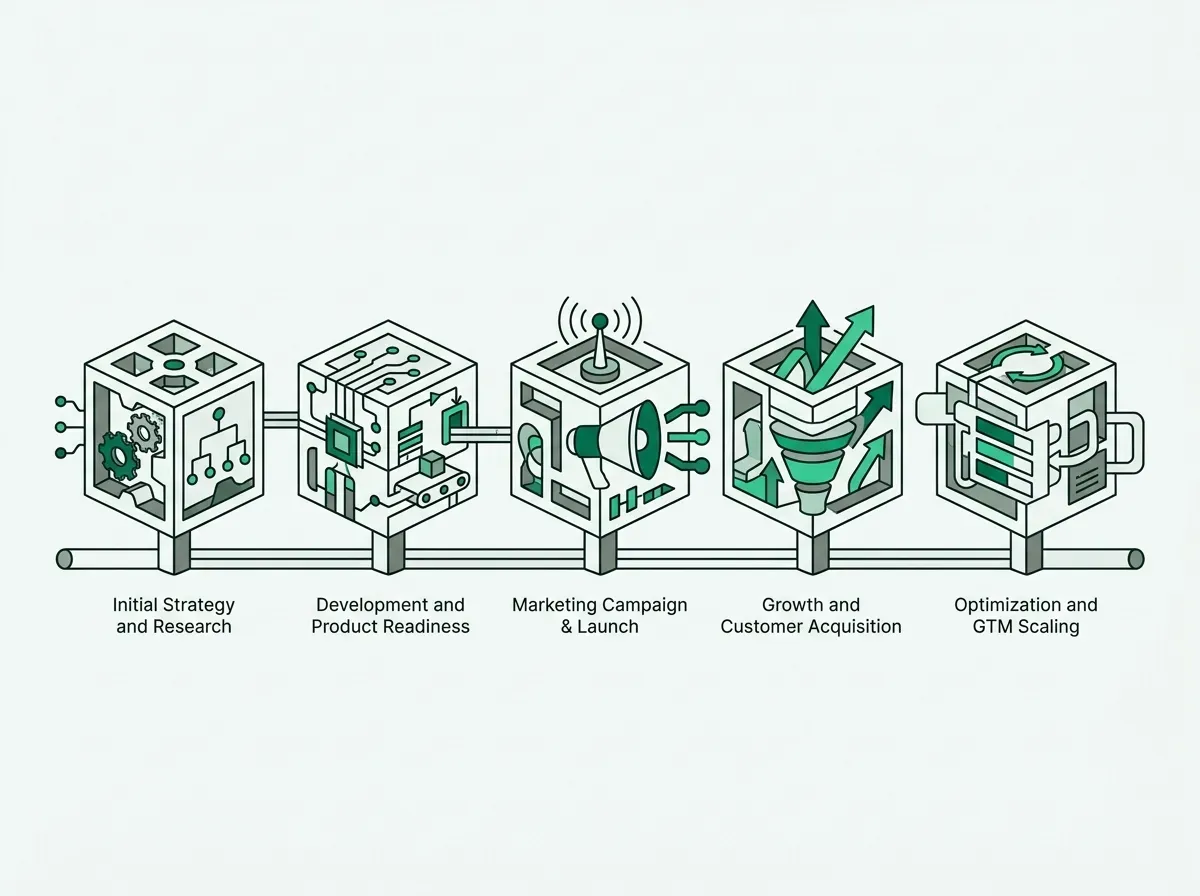
The 5 Core Jobs in a Modern GTM Stack
A go-to-market engine succeeds when tools are organized by mechanical function rather than marketing labels. Rather than buying monolithic platforms that attempt to handle every phase poorly, high-performing teams divide their workflow into five distinct operations: signal discovery, data enrichment, contact indexing, agent orchestration, and message delivery.
Understanding this division prevents what we call the integration tax. When revenue teams understand the boundary between primary research and secondary enrichment, they stop paying double credit fees for stale records. Static databases serve as indexing layers, whereas live web sessions capture real-time operational changes.
As documented in our guide on the job-based GTM stack, routing data across clean mechanical boundaries prevents data corruption, lowers monthly software costs, and maintains clear accountability at every stage of the sales pipeline.
Job 1: Intent Discovery and Real-Time Research
Intent discovery tools identify accounts displaying active purchasing behavior across public web platforms before those companies enter a commercial vendor database. These tools scan discussion forums, social feeds, job boards, and site telemetry to detect operational pain points and organizational restructuring.
1. Drevon
Drevon is an evidence-backed prospect research desktop application for macOS. It executes autonomous research workflows inside your local browser sessions across LinkedIn, Reddit, and Crunchbase. Because Drevon connects directly to your existing AI model keys (such as Claude Code or OpenAI Codex), it performs deep discovery without charging per-query data fees or platform markups. Every generated lead includes the exact source URL verifying the detected buying signal.
2. Gojiberry
Gojiberry monitors public social platforms and developer communities for keyword mentions indicating software evaluation. Teams analyzing Gojiberry alternatives use social listening to capture early requirement discussions before buyers contact sales representatives.
3. Common Room
Common Room aggregates community activity across Slack groups, Discord servers, GitHub repositories, and social channels. It maps disparate developer interactions into unified account profiles, helping product-led teams identify when an organization expands its technical usage.
4. Koala
Koala resolves anonymous website visitors into company profiles and individual buyer intent scores. By combining first-party IP resolution with visitor path tracking, Koala alerts sales teams when target enterprise accounts visit pricing pages.
Job 2: Waterfall Enrichment and Data Normalization
Waterfall enrichment engines take an initial seed record (such as a domain or name) and query multiple data vendors sequentially until missing fields are populated. This approach maximizes match rates across emails, direct dials, and firmographic properties.

5. Clay
Clay provides a cloud-based spreadsheet interface designed to build programmatic data enrichment waterfalls across more than 150 providers. According to the Clay plans and billing documentation, Clay restructured its pricing in March 2026 into a dual-currency system featuring a Launch Plan at $185 per month (2,500 Data Credits and 15,000 Actions) and a Growth Plan at $495 per month. Teams comparing workflows in Clay vs Drevon find that Clay functions best as a data transformer for existing tables, whereas Drevon discovers net-new signals on the open web.
6. Deepline
Deepline offers an API runtime that consolidates 97 go-to-market data integrations under a single consumption invoice. It is built for engineers who prefer writing custom backend scripts over managing spreadsheet formulas.
7. Clearbit (HubSpot)
Clearbit embeds firmographic and demographic enrichment directly inside the CRM. It matches incoming form submissions and inbound signups against its proprietary company database to maintain consistent data hygiene.
8. FullContact
FullContact specializes in identity resolution, mapping personal email addresses, corporate identities, and social profiles into a persistent customer graph for cross-channel attribution.
Job 3: Contact Databases and Account Intelligence
Contact databases maintain centralized directories of verified corporate email addresses, direct-dial phone numbers, organizational charts, and company firmographics. They provide the volume needed for cold outbound list building.
9. ZoomInfo
ZoomInfo maintains an enterprise B2B directory paired with org charts and intent topics, sold primarily through multi-thousand-dollar annual contracts. While comprehensive, static directories face natural attrition. Industry research from HubSpot indicates contact lists experience a 22.5% annual decay rate, making real-time validation essential.
10. Apollo.io
Apollo combines an indexed database of over 275 million contacts with native sequence tools. As highlighted in third-party analyses like the Apollo platform review by SyncGTM and comparison breakdowns of Clay versus Apollo on Modern Inbound, Apollo charges entry pricing around $49 to $79 per user per month with tiered export credit caps.
11. Lusha
Lusha provides direct-dial phone numbers and email contacts through a lightweight browser extension, catering to sales development reps conducting individual account prospecting.
12. Cognism
Cognism focuses on European and global contact compliance, offering phone-verified mobile numbers checked against national Do-Not-Call registries across EMEA and North America.
13. LeadIQ
LeadIQ simplifies prospect capture from professional networks directly into CRM systems, reducing manual field entry for SDR teams.
Job 4: Autonomous GTM Agents and Orchestration
Autonomous GTM agents execute multi-step research and administrative tasks without constant manual prompting. These systems connect to external context graphs, interpret prompts, and perform operational workflows.
14. gtm.ai
Introduced by ZoomInfo in mid-2026, gtm.ai provides an open Model Context Protocol (MCP) server and a native command-line interface (`gtm` CLI). It exposes 22 programmatic tools that allow coding agents and terminal workflows to query ZoomInfo data directly.
15. Nex (nex.ai)
Nex deploys cloud-hosted autonomous agents that connect to your CRM, email, and Slack history. It functions as an automated assistant that alerts reps to overdue tasks and drafts personalized messaging based on internal company context.
16. Bardeen
Bardeen is a workflow automation tool combining browser automation with web scrapers. Practitioners reviewing our hands-on comparison of Clay, Apollo, and Bardeen use it to move data between web tabs and cloud tables via custom triggers.
17. Artisan (Ava)
Artisan provides an outbound sales agent named Ava that automates lead discovery, email personalization, and deliverability monitoring within a unified web console.
18. 11x (Alice)
11x provides digital workers that autonomously manage outbound campaigns and handle initial inbound email inquiries before scheduling meetings for human account executives.
Job 5: Multi-Channel Sequencing and Outbound Execution
Sequencing platforms manage email deliverability, inbox rotation, automated follow-ups, and multichannel cadences across email, phone, and social steps.

19. Smartlead
Smartlead provides infrastructure for scale outbound email. According to the published Smartlead pricing breakdown, paid plans start at $39 per month for 2,000 active leads and scale to $94 per month for 30,000 leads, featuring unlimited connected email mailboxes and dynamic IP warmup rotation without per-seat charges.
20. Instantly
Instantly provides multi-account email deliverability, automated warmup tools, and campaign analytics designed for agencies running high-volume outbound campaigns.
21. Salesloft
Salesloft serves enterprise sales organizations by standardizing digital cadences, tracking meeting execution, and forecasting pipeline performance across global revenue teams.
22. Outreach
Outreach provides enterprise sales execution workflows, combining cadence management, conversation intelligence, and deal health tracking for large B2B sales teams.
Complete 22-Tool GTM Architecture Comparison
The following table categorizes all 22 go-to-market tools across their execution environment, pricing model, and underlying data structure.
| Tool | Core Operational Job | Execution Environment | Pricing Model | Primary Data Source |
|---|---|---|---|---|
| Drevon | Intent Discovery | Local Desktop (macOS) | Free (BYO AI Keys) | Live Browser Web Sessions |
| Gojiberry | Intent Discovery | Cloud SaaS | Monthly Subscription | Social Mentions & Developer Forums |
| Common Room | Intent Discovery | Cloud SaaS | Seat + Usage Tier | Community Telemetry & Product Signals |
| Koala | Intent Discovery | Cloud SaaS | Monthly Platform Fee | First-Party Web Traffic & IP Graphs |
| Clay | Waterfall Enrichment | Cloud SaaS | Credits + Actions ($185+/mo) | 150+ Aggregated Third-Party APIs |
| Deepline | Waterfall Enrichment | API Runtime | Usage-Based API | 97 Unified Enrichment Integrations |
| Clearbit | Waterfall Enrichment | Cloud / CRM Native | Contract / Tiered | Proprietary B2B Directory |
| FullContact | Waterfall Enrichment | API / Cloud | Usage Tier | Identity Resolution Graph |
| ZoomInfo | Contact Database | Cloud SaaS / MCP | Annual Enterprise Contract | Proprietary Indexed Database |
| Apollo.io | Contact Database | Cloud SaaS | Per-Seat + Export Credits | Indexed Database & Email Crawlers |
| Lusha | Contact Database | Browser / SaaS | Per-Seat Credit Model | Community Phone Directory |
| Cognism | Contact Database | Cloud SaaS | Annual License | Verified Global Phone Directory |
| LeadIQ | Contact Database | Browser / SaaS | Per-Seat Subscription | LinkedIn Profile Extraction |
| gtm.ai | Agent Orchestration | MCP Server / CLI | ZoomInfo Contract + Credits | ZoomInfo GTM Context Graph |
| Nex | Agent Orchestration | Cloud SaaS | Monthly Platform Fee | Internal CRM & Workspace Graph |
| Bardeen | Agent Orchestration | Browser Extension | Seat + Run Credits | Custom Scrape Selectors |
| Artisan | Agent Orchestration | Cloud SaaS | Monthly Platform Tier | Aggregated B2B Contacts |
| 11x | Agent Orchestration | Cloud SaaS | Annual / Monthly Subscription | Proprietary Cloud Outbound Engine |
| Smartlead | Outbound Execution | Cloud Infrastructure | Monthly Active Leads ($39+/mo) | User-Provided Mailboxes |
| Instantly | Outbound Execution | Cloud Infrastructure | Monthly Account Tier | User-Provided Mailboxes |
| Salesloft | Outbound Execution | Enterprise Cloud | Annual Seat Contract | CRM Synced Contacts |
| Outreach | Outbound Execution | Enterprise Cloud | Annual Seat Contract | CRM Synced Contacts |
Local Browser Execution vs. Cloud Vendor Privacy
Where your go-to-market software runs directly impacts your regulatory exposure under modern data protection frameworks. Cloud scrapers centralize customer queries on vendor servers, which can create data broker liabilities under the California Consumer Privacy Act enforcement standards.
When an agent runs locally on your workstation, all navigation occurs through your direct browser session. Data flows straight to your local disk in CSV or SQLite formats without transiting an intermediary cloud database. This architecture eliminates third-party data processing agreements and keeps your exploratory research private.
Frequently Asked Questions
How do I choose between an enrichment platform and an AI research agent?
Choose an enrichment platform like Clay when you have an existing list of names or domains that require standardized programmatic matching across multiple structured data vendors. Choose an AI research agent like Drevon when you need to uncover net-new buying signals, read unstructured community discussions, or verify live operational context on the web without paying credit fees.
What is the difference between static intent data and live buying signals?
Static intent data relies on third-party content syndication networks and cookie-based topic spikes, which are frequently delayed by weeks. Live buying signals represent direct, observable primary actions, such as a company hiring for a specific technical role, an executive discussing software limitations on Reddit, or an organization announcing a leadership transition.
How can GTM engineers prevent vendor lock-in when assembling a sales stack?
Prevent vendor lock-in by decoupling your primary data storage and research execution from your sequencing tools. Store your core ICP rules and contact records in local files or standard databases, utilize modular APIs for enrichment, and export validated CSV files to your delivery platform rather than building proprietary logic inside a closed ecosystem.
Is it better to run prospecting agents locally or in the cloud?
Running prospecting agents locally on your desktop offers greater data privacy, uses your own authenticated web sessions, and eliminates recurring cloud compute charges. Cloud execution is preferable for scheduled background tasks that run unattended across hundreds of thousands of uniform database records.
To build a leaner outbound pipeline powered by live web evidence rather than static databases, download the free Mac desktop application and run targeted account discovery in minutes.