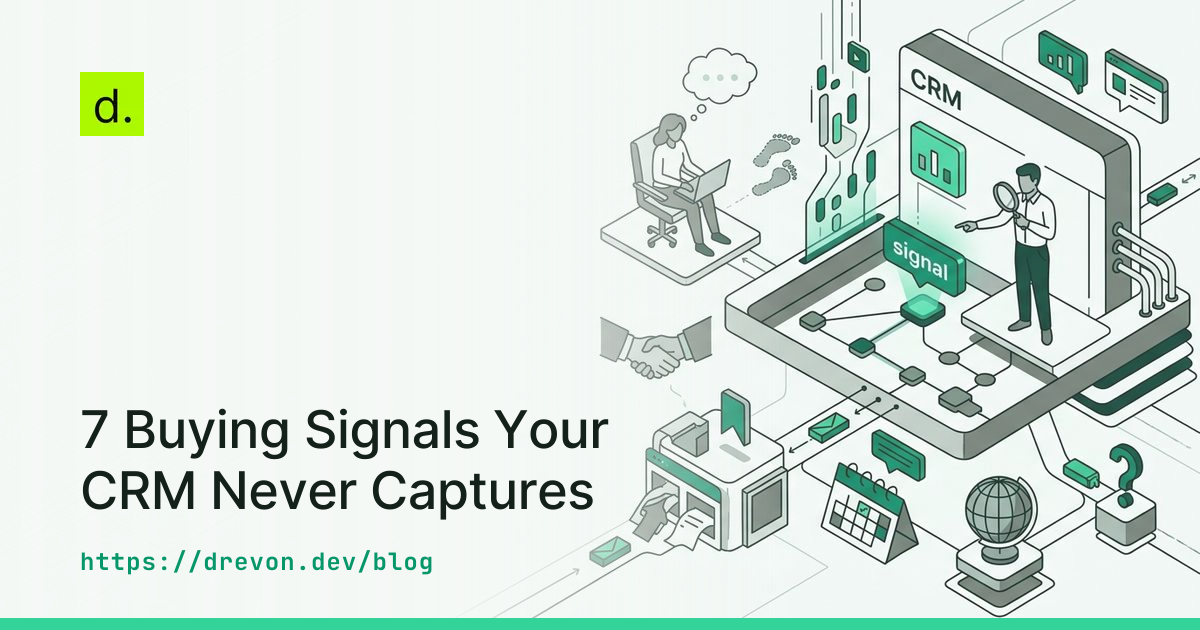
7 Buying Signals Your CRM Never Captures
7 Buying Signals Your CRM Never Captures
TL;DR
- Static B2B contact databases decay at 2.1% monthly (compounding to 22.5% to 30% annually), leaving CRM records systematically stale.
- Over 70% of B2B buying research takes place anonymously across unindexed channels before prospects ever contact a sales team.
- High-intent buying signals like community migration complaints, live job posting edits, and script removals appear in browser sessions weeks before database aggregators flag them.
- Direct browser-based discovery extracts verifiable source URLs for every signal rather than relying on unverified third-party intent scores.
Traditional CRMs fail to surface actionable buying signals because they rely on batched database refreshes and lagging firmographic tables. At Drevon, we built a research model that runs AI agents in your local browser sessions to extract primary-source intent evidence in real time. If you want to identify pipeline opportunities weeks before data vendors update their tables, you can download Drevon for Mac and audit your target accounts directly from live web sources.
Why Static CRMs Miss Real-Time Buying Intent
Static CRMs miss immediate buying intent because structured contact databases operate on delayed batch updates rather than active web monitoring. Data decay, vendor aggregation lag, and authentication barriers prevent centralized repositories from capturing conversational signals when they first occur.
Enterprise B2B data decays at a baseline rate of 2.1% per month, compounding to between 22.5% and 30% annually according to research from HubSpot and MarketingSherpa. Dun & Bradstreet calculates that 120 corporate addresses, 75 phone numbers, and 20 executive leaders change every thirty minutes in standard commercial registries. When revenue teams rely solely on static lists, their outbound campaigns hit accounts that have reorganized, reassigned budgets, or already finalized vendor shortlists.
In a July 2026 benchmark conducted by 42 Agency tracking executive job movements, 10 out of 12 major data providers—including ZoomInfo, People Data Labs, and ContactOut—retained outdated employer data two weeks after a public VP transition had been announced. ZoomInfo attached a 93/100 confidence score to an incorrect record. Only query-time web execution captured the role change immediately. By the time quarterly bulk refreshes run, the critical 90-to-100-day window where new leaders re-evaluate their software stacks has passed.
Furthermore, research from Gartner shows that B2B buyers spend only 17% of their total purchase journey meeting with potential vendors. The remaining 83% takes place out of sight in what 6sense and Green Hat call the dark funnel. Aggregated intent feeds cannot scrape member-only technical forums, private direct messages, or dynamic careers pages that require browser authentication. Browser-native agents read the live DOM directly, bypassing API blind spots.

Signal 1: Stack Deprecation Discussions in Niche Communities
Stack deprecation discussions occur when engineers, architects, and operators share unfiltered technical frustrations in community forums weeks before an organization issues a formal request for proposal. These conversational threads pinpoint accounts facing operational bottlenecks in real time.
When an engineering team struggles with a database bottleneck, an auth provider rate limit, or unexpected billing hikes, they post specific troubleshooting queries on subreddits like r/devops or dedicated ecosystem Discord servers. A team lead asking, "How are teams managing Redis failover at 50k QPS without paying Enterprise tier overages?" is actively evaluating alternatives. In our guide on finding B2B buying signals on Reddit, we documented how tracking contextual complaint phrases reveals enterprise dissatisfaction long before static intent scores register a spike.
A Refine Labs attribution analysis of $21.5M in B2B SaaS ARR found that community and dark social touchpoints accounted for 53% to 85% of self-reported pipeline influence. When browser agents inspect these discussions, they extract the user handle, company domain, and verbatim problem statement. Instead of sending generic cold outreach, sales engineers can reference the exact architectural friction point and provide technical documentation that solves it.
Signal 2: Granular Tooling Requirements in Active Job Postings
Active job postings highlight precise infrastructure requirements, migration targets, and internal skill gaps long before those tools show up in third-party technographic databases. Specific line items in job specs reveal active procurement projects.
Aggregated hiring signals tell you only that a company added headcount in engineering or sales. They do not parse the nuances within the job description body. For example, a listing for a "Senior Data Engineer" specifying "Experience migrating legacy Snowflake models to ClickHouse and building real-time Kafka pipelines" proves that the organization is actively rebuilding its data stack.
B2B sales research indicates that hiring intent is most actionable within 7 to 30 days of a listing going live. Batch technographic aggregators take weeks to ingest and categorize these changes. By deploying browser intelligence over waterfall enrichment, growth teams can parse live careers pages directly, matching target tool keywords against active hiring requisitions within minutes of publication.

Signal 3: Unannounced Leadership and Team Transitions on LinkedIn
Leadership changes on LinkedIn indicate budget reallocations and stack reviews, which take place during an executive's first 90 to 100 days in a new position. Browser sessions identify headline updates and transition posts weeks before database vendors re-verify corporate inboxes.
According to the U.S. Bureau of Labor Statistics and LinkedIn economic graph data, approximately 20% of B2B professionals change roles each year. When a new VP of Marketing, VP of Engineering, or Head of Sales begins a role, they evaluate incumbent vendors to eliminate redundant costs and implement their preferred tooling. A data provider running 30-day update cycles burns a third of this high-conversion transition period before alerting reps.
Browser agents check target accounts for recent executive profile adjustments, promotion announcements, and "starting a new position" updates across your network. Linking these profile changes to account records enables timely outreach that aligns directly with the new buyer's onboarding roadmap. For tactical sequencing, review our breakdown of LinkedIn signals that predict buying intent.
Signal 4: Open Peer Review Inquiries and Alternative Recommendations
Peer review inquiries on public networks show prospects asking colleagues for direct software recommendations. These explicit queries represent active shortlist formation happening outside search engine indexes.
G2's Buyer Behavior Report notes that peer networks and generative AI queries have overtaken traditional vendor websites as the primary shapers of early vendor shortlists. When a CTO posts, "Looking for alternatives to Datadog that handle distributed tracing with predictable pricing," they have already passed the problem-awareness stage and entered the vendor selection phase.
Third-party platforms like Apollo ($49-$119/user/month, checked August 2026) or Clay ($149/month Starter, checked August 2026) charge credits to enrich static contact fields, but they cannot notify you when an operator posts a public recommendation request. Capturing verifiable intent requires saving the exact URL, timestamp, and context of the inquiry, a practice we detail in why every lead needs a source URL.
Signal 5: Documentation and Changelog Shifts Among Competitors
Competitor changelog and documentation edits signal pricing increases, feature retirements, and API deprecations that create immediate churn risk across their installed base. Tracking these public updates uncovers vulnerable accounts seeking replacement software.
When a legacy vendor deprecates a popular API endpoint, alters pricing tiers, or forces a migration to an enterprise-only tier, their customer base experiences immediate operational disruption. Monitoring public documentation diffs, release notes, and GitHub repositories lets you pinpoint the exact date a breaking change takes effect.
Once a competitor updates their changelog, search for customer accounts reacting to that release. Combining changelog alerts with social discussions surfaces accounts that need an alternative implementation plan immediately. For a broader framework on sorting structural opportunities from casual web browsing, see our guide to real buying intent versus noise.
Signal 6: Regulatory and Compliance Footprint Adjustments
Regulatory and compliance adjustments—such as privacy policy edits, terms of service changes, and new security compliance badges—signal infrastructure overhauls and expansion into regulated markets. These public modifications indicate active procurement needs.
When an early-stage SaaS company adds a dedicated "Trust & Security" portal or updates its privacy disclosures to cover HIPAA, SOC 2 Type II, or GDPR compliance, it must simultaneously purchase compatible infrastructure software. They need vendor management tools, audit logging software, data residency infrastructure, and automated security controls.
These compliance updates appear in website footers, legal subdomains, and public security registries months before third-party databases tag the company with new industry categories. A browser agent navigating target company legal subpages can inspect text diffs directly to surface accounts undergoing compliance audits. Understanding these mechanics is core to ICP scoring without third-party vendors.
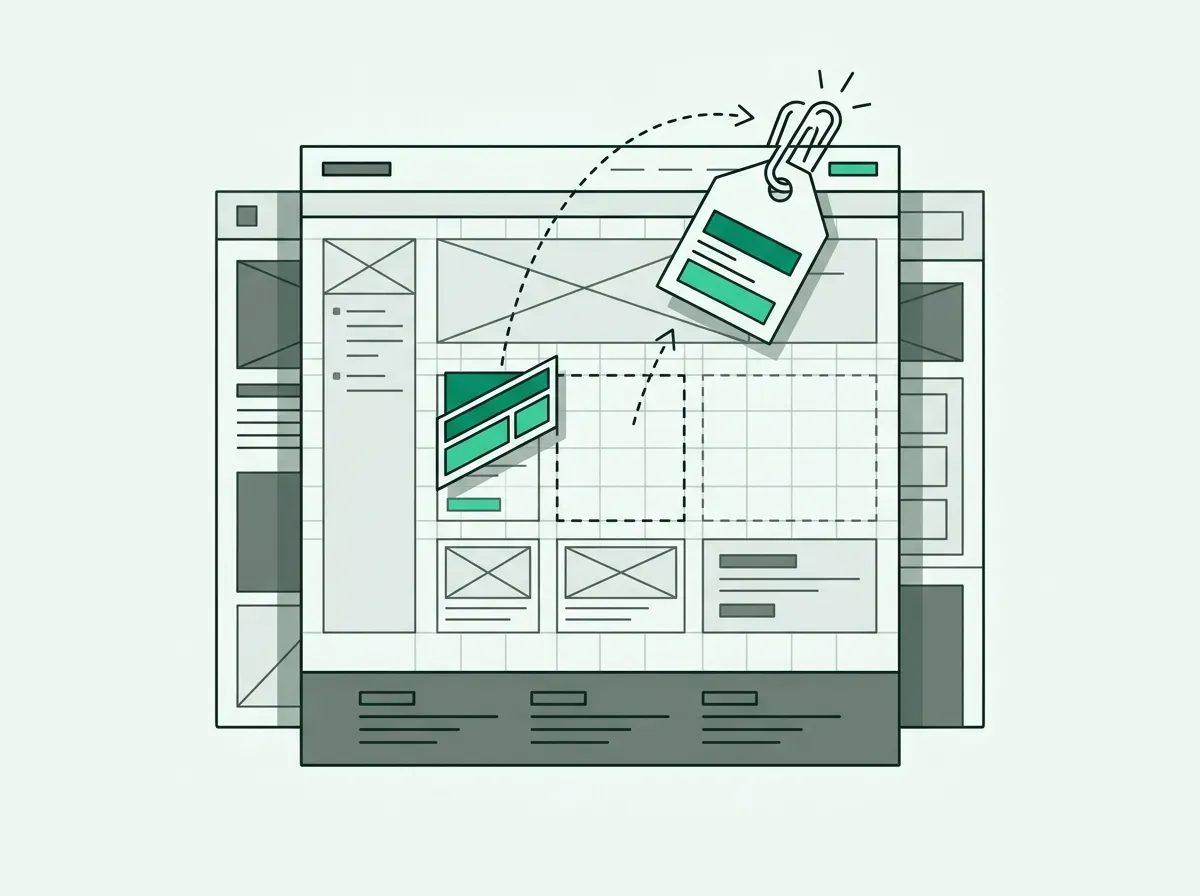
Signal 7: Vendor Tag Deletions in Website Source Code
Vendor tag deletions in website source code reveal when an account uninstalls a competitor's tracking script, analytics pixel, or client SDK. Script removals indicate an active vendor replacement or consolidation project.
Static technographic databases check company tech stacks on infrequent crawling cadences, often reporting technologies that were uninstalled months prior. In contrast, inspecting the live HTML source and network requests of a company's web properties reveals when a specific JavaScript bundle (e.g., an intercom script, a segment snippet, or a Marketo Munchkin tag) disappears from their front-end build.
When a target company removes a legacy vendor's tracking script while adding a trial tag from an alternative provider, that account is actively evaluating alternatives. Detecting tag removals in real time allows outbound teams to engage the buying committee during the trial migration rather than after contract execution.
Comparing CRM Enrichment Against Browser-Native Signal Discovery
The table below compares traditional CRM enrichment databases against real-time, browser-native signal discovery across update frequencies, data freshness, and operating costs.
| Capability | Traditional CRM Enrichment | Browser-Native Signal Discovery |
|---|---|---|
| Update Frequency | Monthly, quarterly, or annual batch sweeps | Real-time query execution across live web pages |
| Average Latency | 14 to 30+ days post-announcement | Minutes to hours after public appearance |
| Community Coverage | Zero (unindexed behind logins or dynamic DOMs) | Full access using authenticated browser sessions |
| Source Verification | Proprietary probabilistic scores (e.g., 90/100) | Direct clickable source URLs for every claim |
| Cost Model | Per-credit fees or annual seat licenses | Free desktop runtime utilizing your existing AI keys |
| Data Decay Exposure | High (22.5% - 30% annual database decay) | Zero (reads the primary page at query time) |
While traditional providers such as ZoomInfo and Apollo offer broad contact indexing, their credit-based pricing models and scheduled batch updates limit visibility into live conversations. As we analyzed in our breakdown of how credit-based pricing penalizes discovery, paying per record discourages sales teams from running the exploratory searches required to uncover subtle buying intent.
Running agents locally through your own browser eliminates the need for expensive third-party data contracts while giving you access to authenticated communities. For deeper technical details on this architecture, read why Drevon runs on your desktop and why we built a browser agent instead of an API wrapper.
Frequently Asked Questions
What are buying signals in B2B sales?
Buying signals are observable digital triggers—such as hiring shifts, public tooling discussions, tech stack alterations, and compliance updates—that indicate an organization is preparing to purchase software. Identifying signals allows sales teams to engage prospects during active evaluation cycles rather than conducting blind outbound outreach.
Why does CRM contact data decay so fast?
B2B data decays at 2.1% per month (compounding to 22.5% to 30% annually) due to job changes, promotions, company restructurings, and domain deprecations. In high-mobility industries like technology, employee turnover averages 20% annually, causing static CRM databases to become inaccurate without constant live re-verification.
How do browser agents capture intent data without data vendors?
Browser agents navigate live web pages—including social networks, job listings, community forums, and public code repositories—using the operator's existing sessions. By reading DOM elements directly, browser agents extract real-time text, timestamps, and verifiable source URLs without relying on pre-aggregated third-party vendor databases.
What is the dark funnel in B2B marketing?
The dark funnel refers to the unindexed, untracked channels where B2B buyers conduct over 70% of their purchasing research before contacting vendors. This includes private Slack communities, niche subreddits, direct peer recommendations, and technical forums that standard marketing analytics cannot measure.
How can sales teams verify intent before reaching out?
Sales teams verify intent by ensuring every identified lead links back to a primary source URL displaying the timestamped trigger. Whether the signal is an active job posting, a forum inquiry, or a changelog update, attaching verifiable proof eliminates guesswork and provides concrete context for outbound messaging.
To start capturing live buying signals across community discussions, careers portals, and web pages, download Drevon for Mac. Drevon runs locally on macOS, connects to your existing Claude Code, OpenAI, or Copilot subscription, and automates evidence-backed prospect research directly in your browser.