8 Salesloft Competitors and What Each Replaces — 340/mo, $78.92 CPC
Salesloft established the cadence execution standard, but revenue teams are unbundling monolithic sales suites into dedicated tools for research, enrichment, and delivery. We built Drevon as a free Mac desktop application for GTM engineers because repetitive outbound sequences fail when prospect lists lack verified intent.
- Salesloft unbundling is accelerating: Modern revenue teams are replacing monolithic sales engagement suites with modular stacks that separate live research, data waterfalls, and outbound delivery.
- Cadence reply rates have dropped: Salesloft's Revenue Team Benchmark Report analyzing 570 million interactions found average SDR reply rates sit at 2.8 percent, with 86 percent of emails containing zero personalization.
- Enterprise costs remain high: Salesloft seat licenses range from $100 to $185 per user per month on mandatory annual contracts, driving teams toward self-serve or local-first tools.
- Different tools replace different layers: Outreach replaces enterprise governance; Clay and Deepline replace static enrichment; Drevon replaces manual SDR pre-call research with browser-native agents.
The Evolution of Salesloft and Where the Stack Fractures
Salesloft established the multi-step cadence format for outbound sales teams over a decade ago. The platform combined email sequencing, dialer tracking, CRM syncing, and opportunity management into a unified interface designed for sales development representatives and account executives. However, the operational model of sending repetitive cadences against static databases has encountered diminishing returns across the revenue landscape.
Standard cold cadences now face severe deliverability and engagement constraints. In its Revenue Team Benchmark Report analyzing 570 million sales interactions across 4,500 organizations, the Salesloft Data Science Team found that SDRs sending templated cadences averaged a reply rate of just 2.8 percent, with 86 percent of outreach containing zero account personalization. In a companion study of 3.4 million cadences, personalizing past a 15 percent threshold produced a 2.75x lift in response rates. When outreach lacks verifiable context, prospects treat multi-step sequences as background noise.
The economic footprint of legacy sales engagement suites also creates friction. According to Salesloft migration documentation and official Salesloft packages availability records, the vendor deprecated its entry-level Essentials tier to focus on Advanced and Premier packages. Procurement benchmarks published in Spendflo's salesloft pricing guide show that typical mid-market contracts range between $20,000 and $120,000 annually, with mandatory 10 to 15 seat minimums and strict annual commitments. When teams add dialer minutes, conversation intelligence add-ons, and separate database subscriptions, the total cost expands rapidly.
As a result, GTM engineers are unbundling this monolithic model. Instead of paying an all-in-one suite to manage both research and execution poorly, teams separate their revenue architecture into four distinct layers: live prospect research, waterfall data enrichment, dedicated multi-channel sequencing, and autonomous CRM operations.
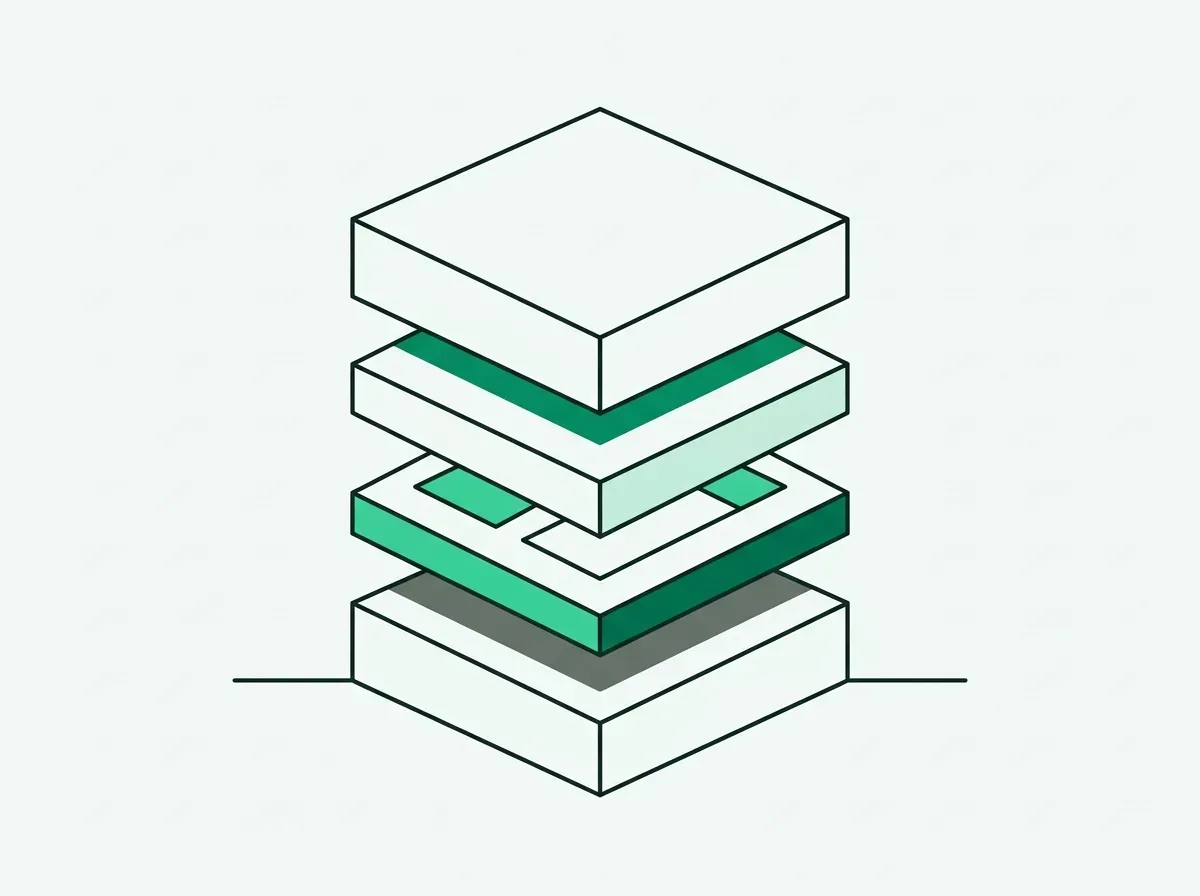
Salesloft Competitors Architecture and Replacement Map
Selecting an alternative to Salesloft depends on which specific component of the platform your team needs to replace. Enterprise organizations looking for direct governance replacements require different software than growth teams that need live buying signals or flat-rate email delivery.
The table below outlines how eight leading competitors compare against Salesloft across primary architecture, data model, and deployment type.
| Platform | Category | Primary Layer Replaced | Pricing Model | Deployment |
|---|---|---|---|---|
| Drevon | Browser AI Research Agent | SDR pre-call research and static contact lists | Free (BYO AI Key) | macOS Local App |
| Outreach | Enterprise Sales Engagement | Cadence engine, dialer, and deal health | $100–$200/seat/mo (annual) | Cloud SaaS |
| Apollo.io | Database and Sequencer | Combined contact data and basic sequences | $49–$119/seat/mo | Cloud SaaS |
| Clay | Waterfall Enrichment | Static CRM field enrichment and scoring | $167–$446/mo + Credits | Cloud SaaS |
| Lemlist | Personalized Cold Outreach | Email sequencing and inbox warm-up | $55–$87/seat/mo | Cloud SaaS |
| gtm.ai | Enterprise MCP Agent | Salesloft Plays and ZoomInfo workflows | Enterprise Contract + Credits | Hosted Server / API |
| Nex | Autonomous CRM Agent | Manual SDR task execution | Enterprise SaaS Contract | Cloud SaaS |
| Instantly.ai | High-Volume Cold Email | Per-seat email sending architecture | $37–$77/mo (unlimited seats) | Cloud SaaS |
1. Drevon: Replacing Static Lists with Live Prospect Research
Drevon is a free desktop application for macOS that runs autonomous AI agents directly in your web browser. Instead of querying a stale database, Drevon navigates live web pages across LinkedIn, Reddit, Crunchbase, job boards, and industry communities to identify prospects actively showing buying intent.
Traditional sales engagement platforms rely on pre-compiled contact databases where data decays rapidly. Research shows that B2B contact data decays by over 30 percent annually as professionals change jobs, alter roles, and switch company emails. When Salesloft users build cadences on static lists, reps spend hours emailing obsolete contacts or writing generic copy that fails to convert.
Drevon replaces the manual pre-call research process and stale contact lists by executing real-time investigation with your authenticated browser sessions. When you ask Drevon to find target accounts, it browses the open web, reads discussion threads, verifies company headcount changes, and delivers a structured CSV or Markdown file. Crucially, every single prospect record includes proof of intent with direct source URLs.
Because Drevon runs locally on your machine, it connects to your existing AI subscriptions (such as Claude Code, OpenAI Codex, or Gemini) without credit markups, token fees, or seat licenses. Teams choose Drevon when they want verified prospect research in minutes rather than blasting generic messages to unverified records.
2. Outreach: The Direct Enterprise Sales Engagement Alternative
Outreach is the most direct enterprise-grade substitute for Salesloft, offering an expansive platform that spans sales engagement, conversation intelligence, and pipeline forecasting. It serves large revenue organizations that require strict administrative controls, branch logic, and granular Salesforce governance.
Outreach directly replaces Salesloft's Cadence engine, Deals tracking module, and native dialer. According to software procurement analysis from SaaS Blue Book's Outreach review, Outreach packages its product across three core pillars: Engage (multichannel cadences), Deal Health and Commit (revenue forecasting), and Kaia (live meeting transcription and real-time battlecards). This matches Salesloft's Advanced and Premier capabilities closely.
Procurement data from Vendr's enterprise benchmark reports shows that Outreach contracts list between $100 and $200 per user per month on annual terms, with median company spend sitting near $45,540 per year. Outreach excels at enterprise compliance, complex multi-team permission hierarchies, and bi-directional CRM syncing. However, like Salesloft, it remains a delivery vehicle rather than a research engine, requiring external data sources to supply fresh contact information.
3. Apollo.io: Replacing the Separate Database and Cadence Stack
Apollo.io combines a B2B database of over 275 million contacts with native multichannel sequence automation in a single web application. It eliminates the need to maintain separate subscriptions for contact data and email delivery software.
For teams comparing sales engagement tools like Apollo against legacy platforms, Apollo replaces the joint cost of Salesloft plus ZoomInfo. Self-serve pricing starts at $49 per seat per month for the Basic tier and $79 per seat per month for Professional (checked mid-2026), providing an accessible entry point for small to mid-market outbound teams.
The trade-off lies in data decay and deliverability management. Because Apollo operates a centralized database, contact records require secondary verification to prevent email bounces. High-volume outbound teams often export Apollo records into secondary verification tools or enrich them alongside live signals before launching outreach.
4. Clay: Replacing Fixed Field Mapping with Waterfall Enrichment
Clay is a spreadsheet-native data orchestration platform that connects over 50 data vendors, search tools, and AI agents into automated enrichment waterfalls. It replaces static CRM custom field updates with programmatic workflows that query multiple data providers sequentially.
In standard Salesloft workflows, account data remains static once uploaded to a cadence. Clay changes this dynamic by running waterfall enrichment workflows that check multiple providers for missing email addresses, phone numbers, and company metrics. If provider A cannot find an email, Clay automatically queries provider B and provider C.
Clay overhauled its self-serve plans on March 11, 2026, offering Launch plans at $167 per month and Growth plans at $446 per month on annual billing. Its dual-currency meter charges separately for data credits and platform actions. Teams frequently pair Clay with external discovery tools to avoid burning credits on unqualified accounts.

5. Lemlist: Deliverability-First Cold Outreach
Lemlist is a specialized cold email and multi-channel outreach platform engineered around deliverability, dynamic visual personalization, and automated inbox warm-up. It replaces Salesloft's heavy cadence framework for outbound agencies, startups, and agile sales teams.
Salesloft was designed primarily for direct corporate email domains operating within enterprise rate limits. In contrast, Lemlist addresses the technical realities of cold deliverability through its integrated Lemwarm network and automated inbox rotation. The platform allows senders to distribute campaign volume across multiple domains and accounts, protecting domain reputation.
Pricing for Lemlist ranges from $55 to $87 per user per month on annual billing, making it significantly less expensive than enterprise sales engagement suites. While it lacks deep conversation intelligence or enterprise revenue forecasting tools, Lemlist provides personalization features such as dynamic personalized images and liquid syntax variables.
6. gtm.ai: Enterprise MCP Agents on ZoomInfo Data
gtm.ai is ZoomInfo's agent-native revenue execution layer, providing a hosted Model Context Protocol (MCP) server, command-line interface, and API over ZoomInfo's commercial data graph. It replaces manual Salesloft cadence assignments with automated data-triggered plays.
For enterprise revenue operations teams already committed to the ZoomInfo ecosystem, gtm.ai provides programmatic access to firmographic, technographic, and intent databases. Rather than having reps manually browse lists and assign cadences, engineers can write scripts that trigger outreach actions based on licensed database signals.
However, gtm.ai requires a substantial enterprise ZoomInfo contract, paired with consumption-based credits. It does not execute actions within a user's authenticated desktop browser, meaning it cannot inspect authenticated member content on Reddit or private communities where early-stage buyer discussions occur.
7. Nex: Replacing Human Cadence Managers with Cloud Agents
Nex positions itself as an autonomous AI GTM engineer that connects directly to an organization's CRM, Slack workspaces, customer call transcripts, and email threads. It replaces the administrative overhead of assigning, monitoring, and updating cadences manually.
While Salesloft requires human SDRs to log activities and move deals through stages, Nex constructs an internal knowledge graph of company accounts. The software tracks account momentum, flags stalled opportunities, drafts contextual follow-ups, and updates deal fields autonomously in Salesforce or HubSpot.
Nex operates as a fully managed cloud SaaS platform with custom enterprise licensing. It is architected to handle operational CRM maintenance at the org level, making it complementary to execution platforms but distinct from tools designed to assist individual frontline researchers.
8. Instantly.ai: Scaled Cold Outreach Without Seat Markups
Instantly.ai is a dedicated cold email software platform that provides flat-rate campaign sending with unlimited connected inboxes and automated email account warm-up. It replaces Salesloft's per-seat pricing architecture for teams executing scaled outbound campaigns.
Under Salesloft's pricing model, connecting ten sales reps requires ten discrete enterprise seat licenses, resulting in thousands of dollars in monthly software overhead. According to comparative analyses from Woodpecker's salesloft pricing analysis and CloudTalk's salesloft pricing breakdown, seat markups make multi-inbox scaling financially prohibitive for high-volume outbound.
Instantly resolves this bottleneck by pricing on contact volume rather than user seats. Its Growth tier begins at $37.60 per month, and Hypergrowth sits at $77.60 per month on annual billing. Both plans include unlimited email accounts and unlimited team seats. The platform focuses strictly on cold email deliverability and analytics, leaving deep pipeline inspection and live research to specialized companion tools.
How to Choose the Right Salesloft Alternative for Your Stack
Choosing an alternative revenue stack requires auditing where your team spends its time and software budget. If your primary challenge is outbound response rates, switching from Salesloft to Outreach will not fix conversion bottlenecks because both platforms rely on upstream list inputs.
When calculating the integration tax of multi-seat sales tools, look at the cost per qualified conversation rather than the cost per sent email. Many high-growth teams achieve superior results by pairing a modular stack: using Drevon for live browser-based prospect research, Clay for data enrichment workflows, and a lean delivery platform like Lemlist or Instantly for email execution.
This modular approach eliminates rigid annual seat minimums, avoids credit-based pricing penalties during discovery, and ensures every outbound message is grounded in verifiable buying intent.
Frequently Asked Questions
What is the main difference between Salesloft and Outreach?
Salesloft and Outreach are direct enterprise competitors that provide sales engagement, dialer tools, and revenue forecasting. Outreach emphasizes deep Salesforce integration, complex multi-tier governance, and automated deal health scoring. Salesloft focuses on seller workflow cadence orchestration and integrated coaching through its Rhythm interface.
Can you use Drevon alongside existing sales engagement platforms?
Yes. Drevon operates as an upfront prospect research engine on macOS. It searches live web sources across LinkedIn, Reddit, and Crunchbase to extract high-intent accounts and verified buying signals, then exports structured CSV and Markdown files that you can import directly into Salesloft, Outreach, Apollo, or Lemlist.
How much does Salesloft typically cost compared to modern modular alternatives?
Salesloft sells on mandatory annual contracts averaging $100 to $185 per user per month, plus dialer add-ons and onboarding fees that bring mid-market contracts to $20,000–$120,000 annually. In contrast, modular stacks pairing Drevon (free desktop app) with self-serve sequencers (like Instantly at $37/mo or Apollo at $49/seat/mo) cost a fraction of enterprise suites.
Why are teams moving away from credit-based sales intelligence platforms?
Credit-based models charge users for every row queried, penalizing exploratory research and broad market mapping. When teams pay per lookup, reps hesitate to inspect edge-case accounts. Local-first tools that connect to flat-rate AI subscriptions allow GTM engineers to conduct thorough prospect research without incurring per-record data fees.
Which Salesloft competitors offer native AI prospect research with source verification?
Drevon provides browser-native AI prospect research where every data point links directly to its live source URL. While platforms like Outreach Amplify and Clay offer cloud-based generative AI summaries, Drevon executes searches within your own authenticated browser sessions to verify recent web discussions, hiring events, and community posts in real time.
To start uncovering high-intent accounts with verifiable source URLs, download Drevon free for Mac today.