AI Sales Assistants: 9 Tools and What Each One Automates — 1,500/mo
Modern sales tools claim broad automation, but their underlying architectures determine what they can actually deliver. Drevon built a free Mac desktop application to conduct research directly within live browser sessions, while other tools rely on static third-party databases, cloud spreadsheets, or headless email bots. Understanding how these nine tools execute tasks helps growth teams choose the right software for their pipeline.
The Four Architectural Models of AI Sales Assistants
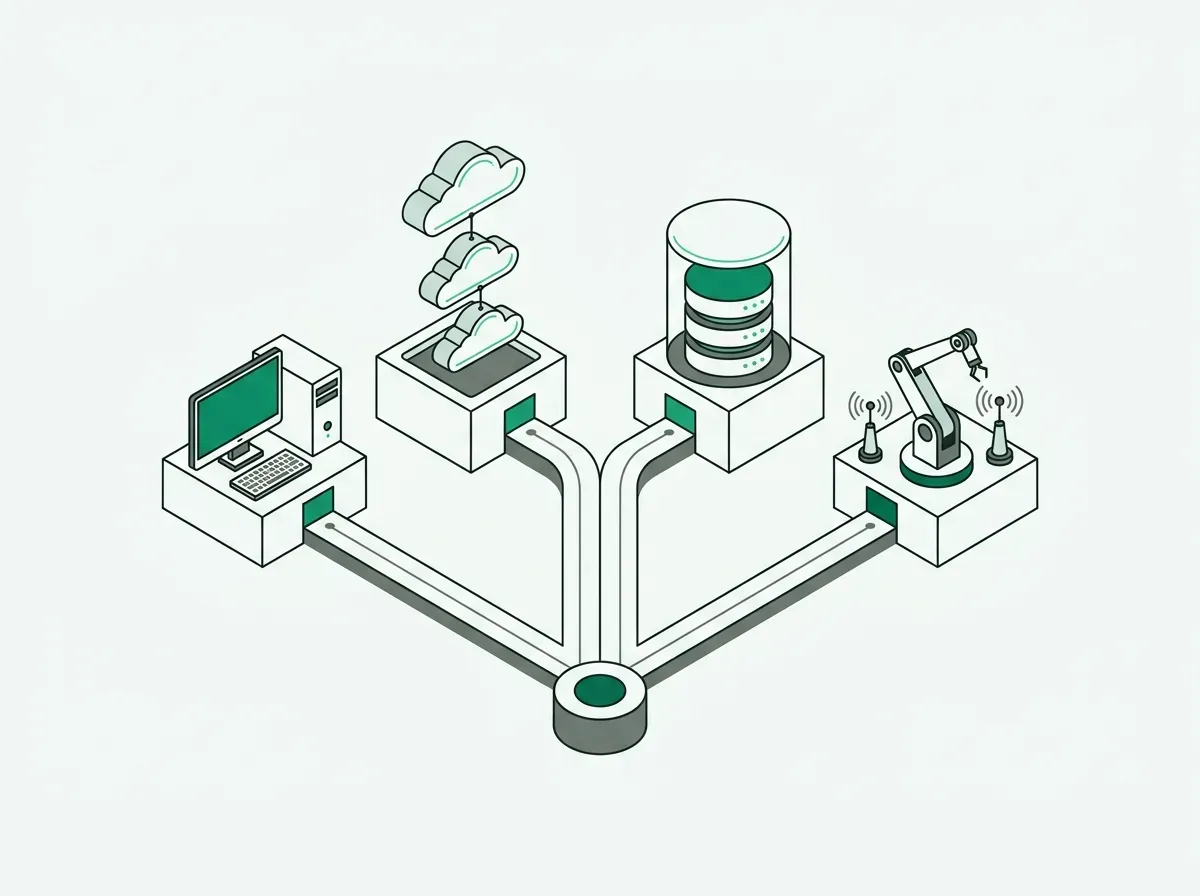
AI sales assistants operate across four distinct architectures: database copilots, cloud enrichment tables, autonomous outbound bots, and local browser agents. Each model processes data differently, handles storage through separate mechanisms, and incurs distinct infrastructure costs that shape how your team discovers, verifies, and contacts target accounts.
Database copilots sit on top of centralized contact indexes. They generate search queries and draft messages against stored profiles, but they cannot verify whether a prospect changed jobs yesterday. Cloud enrichment tables run scheduled scrapers and third-party APIs across spreadsheet rows, charging per-action fees. Autonomous outbound bots manage email inboxes directly, generating and sending copy without human review. Local browser agents execute tasks inside sandboxed browser views on the user's computer, reading primary web pages directly through existing user sessions.
These architectural differences create operational tradeoffs between data freshness and execution scale. A team buying static data accepts contact decay, while a team running autonomous bots risks domain reputation damage. The table below outlines how each architecture operates across core technical dimensions.
The following table outlines the architectural tradeoffs across all four categories of sales automation tools.
| Architecture Model | Primary Tools | Execution Environment | Data Source | Cost Model |
|---|---|---|---|---|
| Local Browser Agent | Drevon | Local macOS sandbox | Live websites via active sessions | Free app / Bring Your Own Model |
| Cloud Enrichment Table | Clay | Cloud server / worker queue | Waterfall APIs and proxy scrapers | Monthly subscription plus credit usage |
| Database Copilot | Apollo, ZoomInfo | Vendor cloud database | Proprietary contact index | Per-seat license plus data credits |
| Autonomous Outbound Bot | 11x, Artisan, Regie.ai | Hosted multi-tenant cloud | Aggregated vendor pools | Annual enterprise contracts |
1. Drevon: Local Browser-Native Prospect Research
Drevon is an evidence-backed prospect research desktop application for macOS that runs local AI agents inside your browser. Instead of querying a static database, Drevon uses your active logins across LinkedIn, Reddit, Crunchbase, and job boards to extract live buying signals, saving verified source links directly into local Markdown and CSV files.
Because the application runs locally via Electron, it operates directly with the user's credentials. It interacts with Chromium through isolated sessions defined in the Electron session API. Renderer processes run under strict Chromium process sandboxing with context isolation enabled, preventing untrusted website code from accessing system resources or local files.
Drevon automates manual discovery workflows. A user enters a prompt such as finding fifty companies hiring engineering leaders that mention specific infrastructure migrations. The local agent visits company career pages, cross-references recent executive posts on LinkedIn, and gathers public discussions on Reddit. It completes these runs in roughly ten minutes, producing clean spreadsheets where every data point cites an exact URL.
Drevon is free to download and run on macOS. Users connect their existing AI accounts, such as Claude Code, OpenAI Codex, GitHub Copilot, or Google Gemini. This local-first structure avoids monthly seat markups, eliminates data credit deductions, and prevents internal research queries from leaving your machine. For deeper context on this model, read our breakdown of why Drevon runs on your desktop, not in the cloud, our guide on how we find B2B buying signals on Reddit, and our technical guide on GDPR-compliant lead research.
2. Clay: Waterfall Enrichment and Cloud Agent Orchestration
Clay is a cloud-based data orchestration workspace that combines multiple third-party data providers into automated spreadsheet waterfalls. It enables sales operations teams to clean lead lists, run cascading identity lookups across dozens of vendors, and execute cloud-hosted scraping tasks called Claygents to populate custom account attributes.
Clay automates multi-provider enrichment chains. When an SDR imports a list of target company domains, Clay queries low-cost providers first to find verified work emails, falling back to costlier vendors only when initial lookups return empty fields. It also automates qualification scoring, company headcount categorization, and AI snippet drafting using table formulas.
According to Clay's official plans and billing documentation (checked August 2026), the platform separates usage into workflow actions and data credits. The Launch plan costs $185 per month billed monthly (or $167 per month billed annually) and includes 2,500 data credits alongside 15,000 actions. Base data credits cost approximately $0.05 on this tier, with extra credit top-ups carrying a 30% premium over base subscription rates.
Clay excels at structured list hygiene and high-volume data normalization across structured APIs. However, running open-ended exploratory research through cloud scrapers can consume credits rapidly. Teams researching ambiguous buying intent often find that credit costs compound before finding qualified accounts. We explored these mechanics in our analysis of credit-based pricing models and our detailed Clay vs. Drevon data enrichment comparison.

3. ZoomInfo Copilot & gtm.ai: Enterprise Database Intelligence
ZoomInfo Copilot and gtm.ai provide an enterprise intelligence layer built directly over ZoomInfo's licensed global business database. The platform uses machine learning models to detect account-level buying signals, monitor organizational changes, summarize account histories, and supply generative email briefs directly inside enterprise CRM systems.
The system automates account prioritization for enterprise sales teams. It evaluates web traffic spikes through bidstream data networks, matches those signals to corporate IP ranges, and alerts account executives when target companies display interest in specific product categories. The companion gtm.ai interface offers an agent-native CLI and hosted Model Context Protocol server over this database for automated querying.
ZoomInfo requires annual enterprise contracts that frequently start in the five-figure range, paired with strict seat minimums and tiered credit allocations. The platform is well suited for large enterprise revenue teams that require deep organizational charts, phone switchboard extensions, and centralized governance. Its primary limitation stems from its intent data model: bidstream IP matching infers corporate intent at the domain level, but cannot prove whether a specific decision-maker is actively searching for a solution. For hands-on evaluation of database architectures, review our hands-on GTM tool comparison.
4. Apollo.io: Contact Sourcing and Sequence Automation
Apollo.io combines a 275-million-contact B2B database with an outbound email sequencer and native AI writing assistant. The platform automates persona-based lead filtering, direct dial extraction, multi-step email cadences, and basic call transcription within a single cloud dashboard.
Apollo automates list generation from firmographic filters. Sales reps select industry codes, location boundaries, and job titles to generate contact lists, then apply Apollo's AI writer to generate customized email copy for each prospect. The platform automatically tracks email opens, logs replies, and adjusts cadence steps based on recipient engagement.
According to Apollo's published pricing (checked August 2026), the Basic plan costs $49 per seat per month billed annually, while the Professional plan is $79 per seat per month. Apollo uses separate pools for data credits and mobile credits. Mobile phone reveals consume eight credits each, with monthly allowances capped at 75 on Basic and 100 on Professional. Unused credits expire at the end of each billing cycle without rollover. To compare outbound architectures, see Clay's analysis of Clay vs Apollo.
Apollo provides an accessible starting point for outbound cadences, but teams must manage contact accuracy. Contact databases experience natural decay rates between 20% and 30% annually, as documented in our study on why B2B data decays over time. Relying exclusively on static database filters without live verification often leads to high bounce rates.
5. 11x (Alice & Julian): Autonomous Outbound Digital Workers
11x develops autonomous AI digital workers, including Alice for outbound sales and Julian for phone execution. Rather than acting as a copilot for human reps, 11x automates the full outbound workflow: sourcing prospective accounts, drafting personalized outreach, sending messages, and handling incoming inbox responses to book calendar meetings.
The software automates inbound qualification and cold outbound campaigns end-to-end. Alice monitors trigger events, selects matching target accounts from connected data pools, crafts multi-touch messaging sequences, and answers logistical questions from prospects directly over email.
According to procurement benchmark reports compiled by Miniloop's 11x pricing analysis and Vendr marketplace transaction data (checked August 2026), 11x operates on mandatory 12-month annual contracts with a median contract value of $55,050 per year. Standard single-agent deployments typically range between $38,250 and $65,550 annually, with advanced capacity tiers reaching $45,000 per year for approximately 3,500 prospects per month.
11x provides high output volume for organizations seeking to automate standard outbound workflows without adding SDR headcount. However, autonomous senders introduce deliverability risks. According to Sinch Mailgun's Email Impact Report 2026, which analyzed over 400 billion emails across 10 industries, nearly 18% of sent emails fail to reach the inbox. Furthermore, Instantly's Cold Email Benchmark Report 2026, based on platform-wide telemetry across billions of delivered cold emails, places the average B2B cold email reply rate at 3.43%, with top performers clearing 10% through tight segmentation and verified intent data. Without verifiable context, autonomous emailers risk sending ungrounded claims that trigger spam filters. To evaluate source reliability, read our breakdown of what proof of intent really means.

6. Artisan (Ava): Full-Funnel Outbound Automation
Artisan provides an integrated AI sales platform centered on Ava, an automated B2B outbound agent. Artisan bundles lead sourcing across an internal contact pool, email deliverability warm-up tools, multi-vendor waterfall enrichment, and automated campaign copywriting into a single web application.
Ava automates prospecting workflows across five distinct operational stages. The agent monitors target account triggers, enriches contact details across roughly a dozen third-party providers, drafts outbound copy, adjusts deliverability settings across multiple mailboxes, and replies to introductory emails to propose meeting times.
Artisan operates on annual contract terms, with Vendr procurement benchmarks tracking a median contract value of $30,000 per year (checked August 2026). Reported standard single-agent deployments generally land between $1,500 and $3,000 per month ($18,000 to $36,000 per year) depending on contact volume requirements, alongside a baseline employee tier starting at $600 per month billed annually.
Artisan suits growth teams wanting a consolidated outbound platform without assembling separate tools for data, enrichment, sending, and warm-up. The tradeoff lies in platform flexibility. Because Artisan operates as a closed cloud application, GTM engineers cannot easily inspect raw browser sessions or integrate custom local Python extraction scripts into Ava's core research loops. For strategies on building intent pipelines without locked suites, see our guide on how to build a signal-based engine without intent data.
7. Regie.ai: Enterprise Multi-Touch Cadence Personalization
Regie.ai is an enterprise generative content platform that integrates directly into sales engagement platforms such as Salesloft, Outreach, and HubSpot. It analyzes CRM data, corporate collateral, and historical response rates to generate custom outbound messaging for enterprise sales teams.
Regie.ai automates content personalization across sales sequences. When an SDR prepares an outbound sequence, Regie.ai reads prospect job titles and industry backgrounds to generate tailored email copy, LinkedIn connection notes, and cold call phone scripts. It also scans corporate blog posts to convert long-form marketing content into short SDR outreach templates.
Regie.ai uses annual contracts with mandatory seat minimums. Sales-led pricing tiers include an AI SEP plan at $180 per user per month with a 10-seat minimum ($21,600 per year floor) and a Force Multiplier Rep plan at $499 per user per month with a 5-seat minimum ($29,940 per year floor). It is effective for mature outbound teams that have existing data vendors and sales engagement tools but need consistent message quality across dozens of SDRs. Because Regie.ai focuses on copywriting, it does not provide native prospect discovery or contact scraping. Teams must supply their own verified account data.
8. Nex.ai: Autonomous GTM Engineering for Revenue Graphs
Nex.ai positions itself as an autonomous AI GTM engineer that connects directly to company CRMs, Slack instances, call recordings, and email systems. It continuously analyzes pipeline data, audits CRM hygiene, highlights deal progression risks, and executes routine operational workflows across your revenue stack.
Nex.ai automates internal revenue operations. It listens to customer call transcripts, identifies mentioned competitors, updates CRM deal stages automatically, writes post-call executive summaries, and creates follow-up tasks for account executives in Slack. It functions as an automated operations analyst monitoring internal revenue graphs.
Nex.ai targets enterprise operations teams seeking to replace manual CRM updates and administrative sales reporting. Its architectural focus is internal deal governance rather than outbound discovery. Teams looking for external prospect discovery, niche community monitoring, or cold lead generation will need to pair Nex.ai with dedicated prospecting tools. For teams evaluating engineering automation, review our guide on what a GTM engineer does and our framework on separating signal from noise in buying intent.
9. Deepline: Waterfall Enrichment API for AI Agents
Deepline is an API-first waterfall enrichment platform designed for GTM engineers and software teams building custom sales agents. It unifies 97 third-party data providers into a single programmatic endpoint, allowing automated scripts to verify emails, fetch firmographic attributes, and enrich contact records on a pay-per-run basis.
Deepline automates technical enrichment logic through strict verification rules. Its waterfall engine first tests deterministic corporate email syntax patterns against verification endpoints to resolve contacts at zero cost. If pattern guessing fails, it cascades queries sequentially from lowest-cost to highest-cost providers, terminating execution the moment a verified record is returned. Every response includes a durable call receipt detailing latency, provider ID, and per-field cost.
Deepline operates on direct pay-per-run API pricing without monthly platform seat taxes. This programmatic runtime is ideal for technical teams building automated outbound workflows in Python or TypeScript. However, Deepline is not a visual GUI tool for non-technical SDRs; teams must write code to ingest results into their CRM or sending infrastructure.
Side-by-Side Comparison: Mechanics, Scope, and Cost
Comparing AI sales assistants requires evaluating where their code executes, where their data originates, and how they bill for usage. The table below compares all nine platforms across their primary technical attributes.
The following table summarizes the technical architecture, core capability, and pricing model across all nine AI sales assistants.
| Platform | Core Focus | Execution Layer | Data Freshness Mechanism | Pricing Model (Checked 2026) |
|---|---|---|---|---|
| Drevon | Evidence-backed prospect research | Local macOS Desktop (Electron) | Live browser sessions (Reddit, LinkedIn, Web) | Free application (BYO AI model) |
| Clay | Waterfall enrichment & table scrapers | Multi-tenant cloud server | 75+ waterfall APIs and proxy scraping | From $185/mo + data/action credits |
| ZoomInfo Copilot | Enterprise contact intelligence | Hosted cloud & MCP server | Proprietary licensed B2B database | Annual enterprise contract ($10k+) |
| Apollo.io | Database search & outbound sequences | Cloud web app | Internal 275M contact database | From $49/seat/mo + credit limits |
| 11x (Alice) | Autonomous outbound digital SDR | Autonomous cloud worker | Aggregated vendor contact pools | From $38,250/yr (Vendr MCV $55k) |
| Artisan (Ava) | Full-funnel outbound automation | Cloud agent platform | 400M contact pool + 12 enrichers | From $1,500/mo (Vendr MCV $30k) |
| Regie.ai | Enterprise sequence copywriting | Cloud generative engine | User-supplied CRM data inputs | From $180/seat/mo ($21.6k/yr floor) |
| Nex.ai | Internal revenue operations agent | Cloud org-context graph | Internal CRM, Slack, and calls | Custom enterprise SaaS pricing |
| Deepline | Waterfall API for sales agents | Developer API runtime | 97+ waterfall data vendors | Pay-per-run API consumption |
How to Choose the Right AI Sales Assistant for Your GTM Stack
Choosing an AI sales assistant depends on your team's engineering capability, data requirements, and outbound strategy. Rather than looking for a single tool to handle every stage of revenue generation, effective GTM teams combine specialized tools across discovery, enrichment, and execution.
If your primary challenge is identifying high-intent accounts with verifiable proof, start with local browser research. Using Drevon allows your team to find prospects discussing specific pain points on Reddit or hiring for niche roles on LinkedIn without incurring data credit costs. Once you extract source-verified target accounts, you can route those records into waterfall platforms such as Clay or Deepline to resolve corporate email addresses.
If your team requires high-volume database filtering and standardized sequencing, platforms such as Apollo or ZoomInfo provide established contact directories. For teams that want to automate outbound email drafting across existing CRM records, Regie.ai provides message governance. Engineering teams building proprietary outbound bots can connect Deepline's API directly to custom scripts, while revenue operations teams managing internal deal flow can implement Nex.ai for pipeline tracking.
To see how live browser research improves list quality, explore our practical frameworks on buying signals you cannot get from databases and waterfall enrichment vs browser intelligence.
Frequently Asked Questions
What is the difference between an AI sales assistant and an AI SDR?
An AI sales assistant helps human reps by performing targeted research, drafting message templates, or updating CRM records. An AI SDR operates autonomously, generating lead lists, sending unreviewed emails, and handling inbox replies to book meetings without direct human intervention.
Why does static B2B contact data decay so quickly?
B2B contact data decays at 20% to 30% annually due to job changes, internal promotions, corporate restructuring, and company closures. Static contact databases update on scheduled crawl intervals, leaving a percentage of contact records outdated at any given time.
How do local browser agents protect user security?
Local browser agents execute tasks inside sandboxed Electron processes on your local operating system. By running locally, they keep research queries on your machine, eliminate the need to upload credentials to cloud servers, and use Chromium context isolation to block remote web scripts from accessing your file system.
Why do autonomous AI senders experience higher spam flag rates?
Autonomous AI senders frequently trip spam filters because email providers evaluate semantic message patterns and token repetition across high-volume sends. Unsupervised messaging also generates higher recipient spam complaints when prospects receive irrelevant outreach, pushing domain complaint rates above the 0.10% threshold.
Can I use multiple AI sales tools together in one GTM workflow?
Yes. Many growth teams pair local browser agents to discover live buying intent with waterfall enrichment APIs to resolve verified contact details, then hand the resulting verified leads to human reps or sequencers for targeted outreach.
To conduct deep, evidence-backed prospect research directly from your Mac without purchasing data credits or committing to annual vendor contracts, download Drevon for macOS and run your first research agent in minutes.