Claude Code Connectors for Sales Research: A Working Setup — 170/mo
Claude Code Connectors for Sales Research
Static contact databases rot by more than 22.5% every year according to HubSpot database decay research, leaving outbound teams with bounced emails and outdated titles. Sales engineering teams are now running Drevon alongside terminal-native agents to conduct live prospect research directly from the command line. You can install the free Mac desktop application to pair local browser execution with terminal-driven intelligence.
- Zero seat markup: Terminal agents drive your direct Anthropic API subscription with prompt caching reads at $0.30 per million tokens instead of fixed per-credit vendor charges.
- Zero snapshot decay: Real-time browser automation reads live public profiles, job listings, and discussion boards at runtime rather than querying 90-day-old database caches.
- Local session security: Model Context Protocol (MCP) servers execute locally in your terminal, using your own authenticated browser sessions without sharing credentials to third-party cloud scrapers.
- Verifiable citations: Every extracted prospect signal and data field outputs directly to local Markdown and CSV files with direct source URLs.
Why Claude Code and MCP Change Outbound Sales Research
Traditional prospecting workflows force sales engineers to query static aggregator databases that snapshot records on 30-day to 90-day intervals. In a survey of 602 CRM practitioners conducted by Validity, 37% of organizations reported direct revenue losses caused by poor CRM data quality, missing an average of 16 sales opportunities per quarter. Compounding this operational loss, Gartner estimates that poor data quality costs organizations an average of $12.9 million annually in wasted engineering effort, stalled pipeline, and operational overhead.
When outbound teams query static lists, they purchase old snapshots. Running terminal-native agents through Anthropic's Model Context Protocol (MCP) specification flips this workflow. Instead of querying a central database vendor, a local agent opens live target web pages, processes unstructured text through an LLM, and formats verified records into local files.
This terminal setup shifts the economic model of GTM engineering workflows. Cloud enrichment platforms charge metered credit fees per column lookup, which discourages open-ended research. By contrast, Claude Code operates over your direct API key or Claude subscription. Because Anthropic prices Claude 3.7 Sonnet prompt cache reads at $0.30 per million tokens (a 90% discount over standard $3.00 per million token input rates), iterative agent loops analyzing long web pages run for pennies per target company. You can review how credit-based pricing models penalize discovery to see the mathematical breakdown across large pipeline runs.
Furthermore, terminal execution allows technical growth teams to pipe structured outputs straight into local Unix tools like jq, awk, or custom Python validation scripts. Instead of waiting for third-party enrichment vendors to add integrations, you control the extraction schema, the request rate, and the exact destination file formats.
Core Architecture: MCP Servers for Prospecting
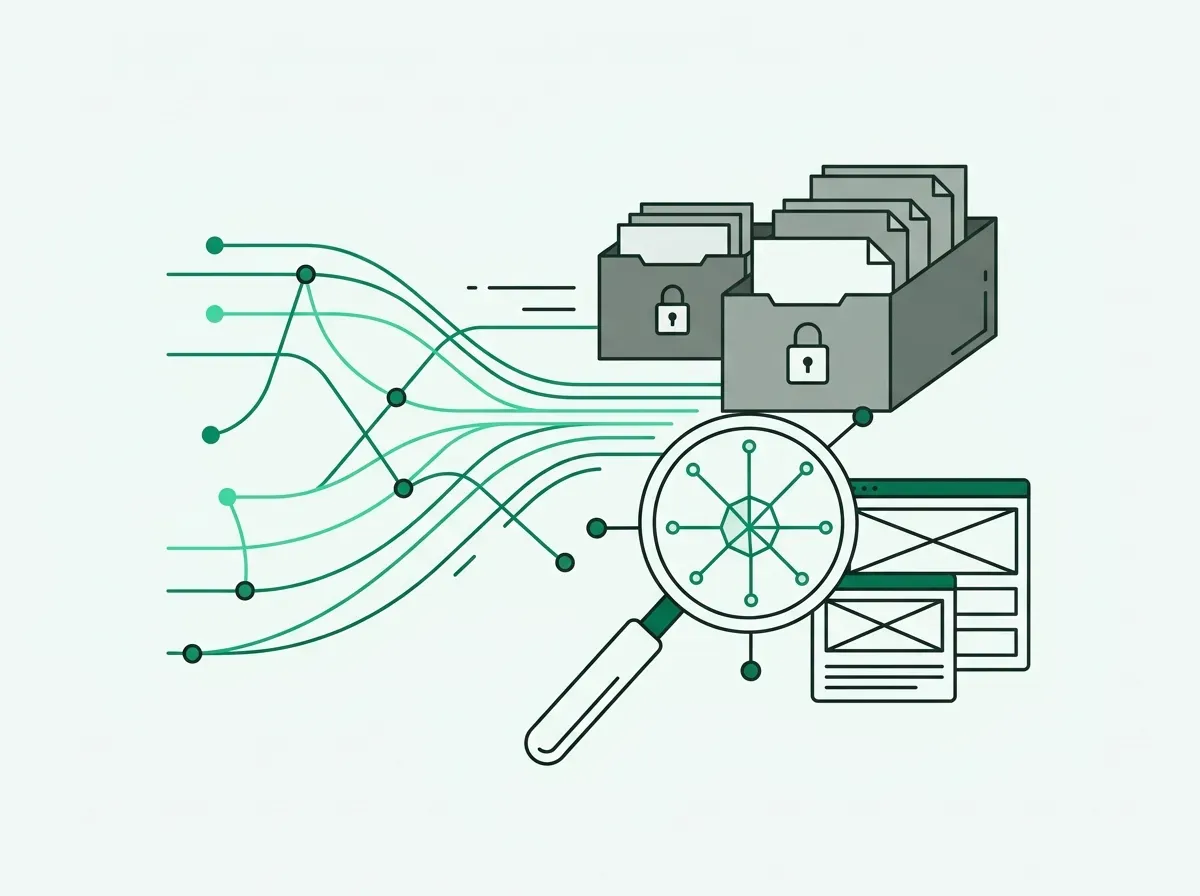
The Model Context Protocol establishes a clean client-server architecture between Claude Code CLI and your workstation. The CLI acts as the host client, managing conversation context, token budgets, and tool invocations. MCP servers run as child processes or local network listeners that expose discrete tool endpoints to Claude.
For sales research, a production setup uses three primary server components:
- Local Filesystem MCP: Reads target account lists from CSV or JSON files and writes structured research dossiers into project directories without routing proprietary data through remote third-party SaaS endpoints.
- Browser Automation MCP: Controls a local headless or headed browser instance using Microsoft's open-source
@playwright/mcpor community drivers like Puppeteer MCP servers. Rather than transmitting heavy visual screenshots, modern drivers parse the browser accessibility tree (AXTree) into compact semantic markup, minimizing token burn during page navigation. - Community and Intent MCP: Connects to developer platforms, job boards, or Reddit via OAuth2 or open JSON endpoints. Reddit allows up to 100 queries per minute on its free developer tier, providing ample headroom for account-level intent discovery without enterprise contracts.
- Local Database / SQLite MCP: Queries local relational tables or DuckDB stores containing historical account interactions, firmographic baselines, and past campaign outcomes to prevent duplicated outreach.
Running browser drivers locally keeps authenticated session cookies inside your own browser environment. The agent inspects member-only pages on professional networks and forums using your active credentials without sending raw session tokens to an external cloud server. For background on local data privacy, read our guide on why desktop execution protects user sessions.
Managing Context Windows and Tool Token Overhead
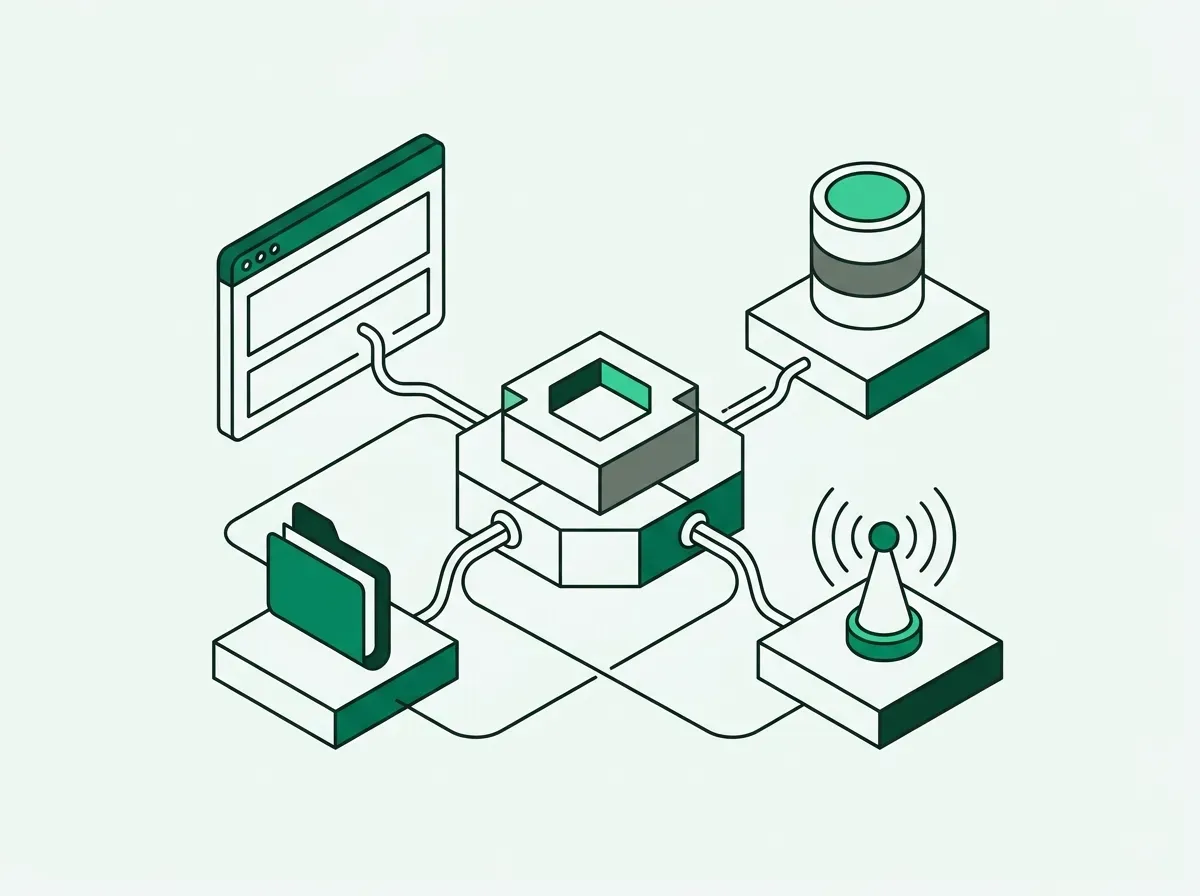
A primary bottleneck when running agentic sales research via MCP is context window consumption. Preloading dozens of verbose MCP tool schema definitions into an LLM session consumes between 50,000 and 75,000 tokens before your first user prompt executes. When research agents navigate multi-page websites, the raw HTML and intermediate tool responses can rapidly exhaust the remaining context.
To keep runs cost-effective and prevent context exhaustion during batch research, apply three architectural constraints:
- Use Semantic Trees Instead of Raw DOM: Passing raw HTML to Claude burns roughly 15,000 to 40,000 tokens per page. Using accessibility tree parsers extracts only interactive nodes, headings, text content, and input fields, reducing page payload sizes down to 800 to 2,500 tokens.
- Implement Scoped MCP Registrations: Do not load universal development servers into sales research runs. Register only the filesystem, browser driver, and specific API connectors required for the prospecting workflow.
- Batch Processing via Subagent Spawns: Instead of processing 50 accounts in a single long conversation thread, script Claude Code to handle accounts in isolated loops. Each account receives a fresh context window, appending its final JSON row into a persistent CSV file via filesystem append calls.
Understanding these data boundary dynamics is essential when contrasting waterfall enrichment vs browser intelligence.

Step-by-Step Setup: Configuring Claude Code Connectors
Claude Code provides dedicated CLI flags to register local STDIO and remote HTTP servers into your environment. You can review the complete syntax in the Claude Code CLI reference.
To add servers to your local project, use the claude mcp add command. STDIO servers require a double-dash separator (--) to split Claude configuration flags from the server runtime command.
1. Add Playwright for Browser Navigation
Register the Playwright MCP server to give Claude programmatic access to a headless browser runtime:
claude mcp add --scope project playwright -- npx -y @playwright/mcp@latest
2. Add Local Filesystem Access
Limit file read and write operations to a specific output folder to keep project workspaces organized and secure:
claude mcp add --scope project filesystem -- npx -y @modelcontextprotocol/server-filesystem ./research-output
3. Add SQLite Pipeline Storage
Connect a local SQLite database to persist verified prospect records and track research runs over time:
claude mcp add --scope project sqlite -- npx -y @modelcontextprotocol/server-sqlite --db-path ./pipeline.db
4. Add Reddit Intent Discovery
You can configure open-source Reddit connectors using your developer API credentials:
claude mcp add --scope project --env REDDIT_CLIENT_ID="your_id" --env REDDIT_CLIENT_SECRET="your_secret" reddit -- npx -y reddit-mcp-server
These commands write tool definitions to a .mcp.json file at your project root, as detailed in the Claude Code MCP quickstart guide. For global availability across all terminal sessions, use --scope user to write directly to ~/.claude.json.
You can also define complex server parameters using the JSON configuration syntax via claude mcp add-json. Verify all active connectors by executing claude mcp list in your terminal before launching research runs.
Three Production Sales Research Workflows
Once your connectors are registered, Claude Code can execute multi-step research plans. Here are three tested production workflows for GTM engineers.
Workflow 1: Account Mapping and Tech Stack Verification
Static databases often list software a company uninstalled two years ago. This prompt directs the browser MCP to inspect live career pages and engineering blogs for verified technology mentions:
"Read the target domain list in./accounts.csv. For each company, open their careers page using Playwright. Find active job postings for backend and DevOps roles. Extract the exact database, cloud provider, and framework names mentioned in the requirements section. Save the output to./research-output/tech-stack-audit.csvincluding the company domain, technology name, role title, job posting URL, and extraction timestamp."
Because the agent reads the live job posting directly, your outreach references current hiring initiatives rather than modeled guesses. You can compare this with buying signals absent from static databases to identify which high-intent triggers can be gathered from live hiring posts.
Workflow 2: Reddit and Community Problem Discovery
Unbranded discussions on developer subreddits highlight acute operational pain points before prospects evaluate commercial vendors. Run this query to surface unbranded buying intent:
"Use the Reddit MCP tool to search r/devops and r/dataengineering for discussions containing 'Postgres replication lag' or 'database connection pool exhaustion' submitted within the last 30 days. Filter for threads where the original poster describes an active infrastructure bottleneck at a growth-stage company. Compile the thread titles, post URLs, user handles, and exact problem quotes into ./research-output/community-intent.md."Review our framework on finding buying signals on Reddit to refine keyword match filters, and check ICP scoring without a data vendor to qualify these accounts mechanically.
Workflow 3: Automated Pre-Call Executive Briefings
Before an enterprise sales call, an account executive needs a verified summary of recent corporate events, leadership quotes, and technical initiatives. This prompt builds a structured executive brief:
"Research target account 'Acme Corp'. Navigate to their press page, recent quarterly shareholder update, and engineering blog. Extract: 1) Three core product priorities stated by the VP of Engineering in the last 6 months; 2) Recent headcount growth areas; 3) Two verified operational challenges. Format the briefing as clean Markdown in ./research-output/briefs/acme-corp.md. Every single fact must contain an inline markdown link to the source web page."This replaces manual search routines. See our guide on automating pre-call briefs with AI agents for formatting templates, or read about researching 20 prospects in under 30 minutes for batch processing patterns.
Claude Code vs. Dedicated Cloud Prospecting Tools
The following table compares local Claude Code MCP configurations against major commercial prospecting and enrichment platforms.
| Feature / Dimension | Claude Code + Local MCP | Clay | ZoomInfo | Apollo |
|---|---|---|---|---|
| Primary Pricing Model | Direct API / Subscription ($3.00/MTok input, $0.30 cached read) | Credit-based plans starting at $149/mo (Clay Pricing, checked August 2026) | Annual enterprise contract ($10k+ floor) (ZoomInfo, checked August 2026) | Credits + seat subscriptions starting at $49/mo (Apollo Pricing, checked August 2026) |
| Evidence Traceability | 100% (Every extracted field links to live source URL) | Variable (Depends on provider waterfall step) | Aggregated database records (No live source URLs) | Aggregated database records (No live source URLs) |
| Data Freshness | Zero snapshot decay (Primary source read at runtime) | Depends on API source (Waterfall caches vary) | Batch refreshed (30–90 day typical decay cycles) | Batch refreshed (Subject to 22.5%+ annual rot) |
| Execution Environment | Local terminal / workstation sandbox | Cloud execution (Shared runner IPs) | Cloud database lookup | Cloud database lookup |
| Authentication State | Uses local browser session cookies securely | Requires public data or vendor API keys | Proprietary vendor network only | Proprietary vendor network only |
| Maintenance Overhead | Requires local Node/CLI setup and prompt tuning | No infrastructure management needed | Turnkey SaaS interface | Turnkey SaaS interface |
While Claude Code offers deep customization, a pure CLI prospecting setup has practical operational limits. Context windows can fill quickly during multi-turn browser sessions, requiring prompt cache management. Non-technical account executives often struggle with terminal syntax, Node runtime updates, and MCP configuration debugging. Maintaining custom scrapers across dozens of changing web layouts also demands ongoing engineering attention.
For teams that need local browser agent power without terminal maintenance, Drevon packages browser-native intelligence into a dedicated Mac desktop application that handles multi-source navigation automatically, avoiding the maintenance tax described in our analysis of the end of static data.
Frequently Asked Questions
Do Claude Code browser connectors violate website terms of service?
Connecting a local browser automation driver like Playwright to your own desktop uses your local IP address and browser profile. Unlike distributed cloud scraping farms that trigger security defenses, local agents navigate public pages at standard human browsing speeds. However, you must always adhere to public robot directives and platform terms regarding automated interactions.
How do API token costs compare to credit-based prospecting tools?
A typical prospect research session involves 15,000 prompt tokens and 1,500 completion tokens. On Claude 3.7 Sonnet, uncached execution costs roughly $0.07 per account. With prompt caching enabled on tool schemas and background context, repeat iterations cost less than $0.02 each. Dedicated enrichment tools often charge between $0.20 and $1.00 in platform credits for equivalent multi-source lookups.
Can non-technical sales reps run Claude Code MCP setups?
Claude Code requires command-line familiarity, Node.js installation, and manual JSON configuration. For non-technical business development representatives, dedicated desktop apps like Drevon provide identical local-browser evidence extraction through an intuitive graphical interface without terminal management.
How does real-time agent research avoid database decay?
Commercial contact databases snapshot company records into central tables that immediately begin decaying at 2.1% monthly according to industry benchmarks from HubSpot. Claude Code connectors query the actual live website, career board, or social discussion in real time, capturing current data at the precise moment of execution.
What should I do if an MCP browser connector gets blocked?
When browser automation encounters bot verification screens or strict rate limits, verify that you are running in headed mode with your normal local user data directory. This ensures the browser carries standard session cookies and browser fingerprints rather than raw headless headers that cloud scrapers emit.
You can run evidence-backed prospect research directly from your desktop. Download Drevon for Mac to run local AI agents across LinkedIn, Reddit, and company websites using your existing AI subscription.