Claude for Sales Research: The Complete 2026 Guide — new, their "Claude for Marketing" analog
Using Claude for sales research gives revenue teams a method to extract structured buying triggers from unstructured web data without buying static contact records. Drevon pairs this reasoning capability with local browser execution, giving growth engineers a free application for macOS to run primary-source account research using the AI accounts they already pay for.
TL;DR
- Sales teams use Anthropic Claude models to synthesize multi-source qualitative evidence, reducing account research time from 40 minutes to under two minutes per company.
- Connecting Claude directly to primary web sources eliminates the 30% annual data decay common to commercial B2B contact databases.
- Direct Claude API execution costs $0.03 to $0.06 per deep account dossier, compared to $0.39 to $0.80 per record on credit-based enrichment platforms like Clay.
- Direct quote grounding and Anthropic Citations reduce extraction hallucination rates to near zero for executive roles and technical buying triggers.
- Desktop agents operating in authenticated browser sessions access private communities, LinkedIn data, and niche forums that cloud scrapers cannot reach.
What Claude for sales research means in 2026
Claude for sales research refers to using Anthropic large language models to analyze company disclosures, job postings, technical documentation, and community discussions for account intelligence. Rather than filtering static database rows by headcount or industry tags, GTM engineers feed raw text into Claude to verify software dependencies, team restructuring, and operational challenges.
Traditional sales intelligence relies on pre-built databases that index demographic data. Frontline sellers frequently find this information stale. According to a Gartner survey of B2B buyers, 69% of buyers turn to sales reps specifically to validate AI-generated insights gathered during self-directed research, rather than relying on reps for initial discovery. Sellers need account-specific context to confirm technical requirements and answer complex evaluation questions.
Claude 3.5 Sonnet, Claude 3.7 Sonnet, and Claude Code handle this qualitative analysis. When a company changes its cloud infrastructure, mentions database migration issues on Reddit, or lists open roles for security engineers, Claude can parse the underlying text and output structured notes. This process replaces manual note-taking and aligns with modern GTM engineer workflows.
The economic model also differs from legacy vendors. Instead of purchasing data subscriptions that charge per credit, teams run prompts against their existing Anthropic API keys or Claude Pro accounts. By orchestrating local browser tasks through Drevon, teams collect public source pages and pass them directly to Claude, establishing evidence-based prospecting without intermediate data markups.
The context window advantage for deep account mapping
Claude handles deep account mapping because its 200,000-token context window holds entire annual reports, product changelogs, API documentation, and engineering blogs within a single prompt. This allows the model to cross-reference multiple documents to verify technical initiatives across an organization.
Keyword filters in legacy databases miss contextual nuances. A database might tag a company with "Kubernetes" based on a legacy blog post. In contrast, feeding five recent infrastructure job listings into Claude reveals whether that company is actively migrating to managed container services or seeking specific security tooling.
Manual account mapping by an SDR typically takes 30 to 45 minutes per account. An SDR must read recent press releases, check leadership changes on LinkedIn, scan open positions, and review product updates. Passing those same source documents to Claude compresses synthesis time to under two minutes per account. The output provides a structured summary citing exact quotes and dates for each finding.

Core sales research workflows to run with Claude
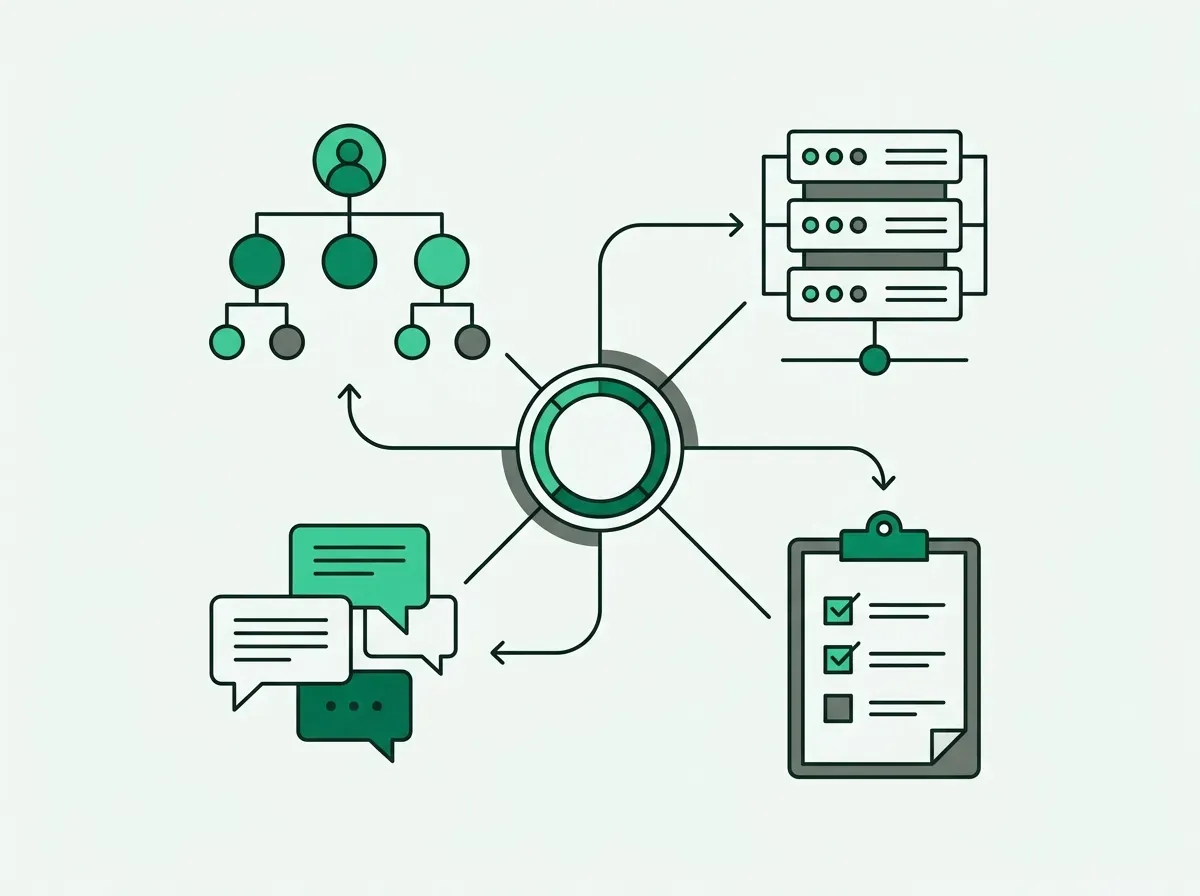
Sales teams run four primary research workflows through Claude to generate account intelligence before reaching out to prospective buyers. These workflows focus on extracting verifiable signals from public documentation rather than guessing prospect needs.
1. Tech stack transitions and hiring intent
Open engineering job descriptions highlight software requirements, planned migrations, and internal pain points. Claude analyzes batches of job postings to identify tools the company currently runs and libraries they plan to deprecate. This intelligence informs outbound messaging with specific technical context, following principles outlined in our guide on buying signals you cannot get from a contact database.
2. Buying committee mapping
Navigating enterprise deals requires identifying functional leaders, technical evaluators, and budget holders. Claude processes unstructured executive bios, press announcements, and team pages to construct organizational hierarchies. It flags recent executive additions and matches them to stated company priorities.
3. Community and sentiment mining
Prospective software buyers frequently discuss operational bottlenecks on public forums. Claude evaluates Reddit threads, discussion boards, and software review listings to identify accounts actively reporting performance issues with incumbent vendors. Teams can implement this approach using methods detailed in our breakdown of finding B2B customers on Reddit.
4. Evidence-backed pre-call briefing sheets
Account executives often spend the first fifteen minutes of meeting preparation aggregating recent news. Claude synthesizes recent 10-K filings, customer case studies, and executive interviews into a single briefing sheet. Each point in the brief links to its underlying source text, accelerating the process described in automating pre-call briefs with AI agents.
Prompt architectures and system constraints
Structured system constraints prevent large language models from hallucinating executive titles, company metrics, or contact information. Grounding Claude strictly in provided text chunks ensures high data integrity for GTM operations.
To maintain factuality, teams apply prompt patterns detailed in Anthropic documentation on reducing hallucinations and distilled in prompt engineering best practices. The most effective pattern is quote-first extraction, where the model must extract an exact string match from the text before outputting a structured field.
You are an analytical GTM research assistant. Your task is to extract executive stakeholder data from the provided text chunk.

1. For every person, extract a verbatim quote from the text that states their exact role.
2. If a role is not explicitly stated in the text, set the role value to null. Do not infer titles.
3. Format the final output strictly as JSON matching the requested schema.

<document>
{{PAGE_CONTENT}}
</document>
API integrations benefit from the Anthropic Citations feature, which converts text segments into indexed objects and returns character offsets alongside answers. Developers building programmatic pipelines can reference the Claude citations API guide and coverage from Enterprise AI World to implement verifiable response schemas.
Browser-native execution versus static API wrappers
Browser-native execution allows sales research agents to run locally inside an authenticated browser session, accessing live web pages without getting blocked by anti-bot protections or login barriers. Cloud-based scraping wrappers rely on third-party server pools that frequently face IP blocks on gated networks.
Cloud scrapers struggle with authenticated enterprise platforms like LinkedIn Sales Navigator, specialized industry directories, and private communities. Because Drevon operates directly on your macOS desktop, it runs tasks within your active browser profiles. The agent navigates pages using the permissions you already possess, saving results locally to SQLite and Markdown files.
This architecture maintains strict compliance standards. Keeping research data stored locally avoids transferring customer lists or candidate names to external intermediary servers, as described in our review of GDPR-compliant lead research and why Drevon runs on the desktop. According to evaluations in the OSWorld 2.0 benchmark on computer use agents, local agent execution represents a dependable mechanism for navigating dynamic, authenticated web interfaces.

Claude vs Apollo, Clay, and ZoomInfo: A structural comparison
Choosing a prospecting stack involves evaluating cost structures, execution environments, and data freshness across available platforms. The following table contrasts direct Claude execution with legacy databases and enrichment tools.
| Dimension | Anthropic Claude API | Clay (clay.com/pricing) | Apollo.io (apollo.io/pricing) | ZoomInfo (zoominfo.com) |
|---|---|---|---|---|
| Data Freshness | Real-time (Primary web pages) | Mixed (Waterfall lookups + Web) | Static database (Periodic crawl) | Static database (Periodic crawl) |
| Pricing Model | Pay-as-you-go API / BYO Plan | Monthly subscription + Credits (Launch $185/mo, Growth $495/mo) | User seat + Export credits | Annual enterprise contract |
| Cost per 1,000 Dossiers | $30 – $60 | $390 – $800+ (Actions + Data Credits) | $49 – $79 (Contact rows only) | Annual license quota |
| Deep Qualitative Synthesis | Native 200k context reasoning | AI Action columns (Claygent) | Limited / None | Limited copilot features |
| Execution Environment | Local Desktop (via Drevon) / Cloud API | Cloud platform | Cloud database | Cloud database |
| Verification Method | Source URL + Verbatim Quote | Waterfall data matching | Internal confidence scoring | Internal verification team |
Static contact databases experience substantial accuracy loss over time. Industry research shows that B2B data decays by over 30% annually as professionals change roles, companies update software vendors, and organizations restructure. Fetching current public pages directly resolves this decay problem.
Credit-based platforms also create unpredictable cost structures for high-volume research. As detailed in our analysis of how credit-based pricing models penalize discovery, conducting multi-source lookups on thousands of accounts quickly exhausts basic platform tiers. On Clay (checked August 2026), generating 1,000 deep research dossiers requires 5,000 to 10,000 Actions and multiple Data Credits per row, pushing monthly costs into the $495 Growth tier or higher. Driving the Claude API directly through local tooling avoids third-party subscription markups while generating deeper qualitative research for each account, reinforcing the benefits of browser intelligence over waterfall enrichment.
Frequently asked questions about Claude for prospect research
Does Claude have live web browsing capabilities for prospect research?
Claude connects to live web browsing via developer tool calling, the Claude Code terminal environment, and native browser automation tools. Desktop orchestrators like Drevon fetch current web content from authenticated browser sessions and feed the raw HTML or text directly into Claude for analysis.
How do you prevent Claude from hallucinating contact emails and company data?
Hallucinations are prevented by enforcing quote-first extraction constraints and XML document structuring. System prompts instruct Claude to extract only exact strings found within the provided source text and to return null values whenever data is absent, eliminating speculative outputs.
Can Claude integrate directly with CRMs like HubSpot or Salesforce?
Claude integrates with CRMs through custom scripts, Model Context Protocol (MCP) servers, or standard API connectors. Drevon exports research findings directly into structured CSV and Markdown formats, which import into any standard CRM or sales engagement platform without manual cleaning.
What is the cost comparison between Claude API tokens and Clay credits?
Generating 1,000 comprehensive account dossiers using Claude Sonnet via the Anthropic API costs approximately $30 to $60 in raw token fees. The equivalent multi-step workflow on Clay requires roughly 2,000 to 6,000 Data Credits and 5,000 to 10,000 Actions, requiring the $495/month Growth plan or higher credit top-ups.
To build your own automated prospect research workflow with Claude without paying for data broker credits, download Drevon for macOS. The application runs locally in your browser, uses your existing AI subscriptions, and delivers evidence-backed prospect research in minutes.