Clay vs Apollo: Which One Belongs in Your Stack — 260/mo, KD 0
Clay vs Apollo: GTM Architecture, Match Rates, and Pricing
Choosing between Clay vs Apollo requires evaluating whether your outbound motion needs a consolidated contact directory with built-in email sending, or an orchestration layer that cascades queries across dozens of external data vendors. At Drevon, we analyze outbound tools by data freshness and verification accuracy, providing a free desktop app for macOS that surfaces primary-source buying signals directly from live browser sessions.
TL;DR: Key Architectural and Workflow Differences
- Core Architecture: Apollo operates a proprietary contact database with 275M+ indexed profiles and native email sequencers. Clay maintains no proprietary contact database, operating as an enrichment spreadsheet that connects to 150+ third-party data providers.
- Match Rate Performance: According to Cleanlist's 2026 benchmarks, single-source platforms like Apollo achieve 70% to 80% email coverage on standard records, while Clay cascades queries across multi-vendor waterfalls to push aggregate match rates above 85%.
- Commercial Model: Apollo charges per user seat starting at $49/month billed annually with strict monthly credit expirations. Clay bills per workspace for pooled Data Credits and platform Actions, supporting unlimited team seats.
- Ideal Fit: Apollo suits sales teams seeking turnkey prospecting and sequence execution. Clay serves technical growth operators and RevOps engineers building custom enrichment pipelines across multiple API endpoints.
Core Architectural Breakdown: Contact Database vs. Enrichment Orchestrator
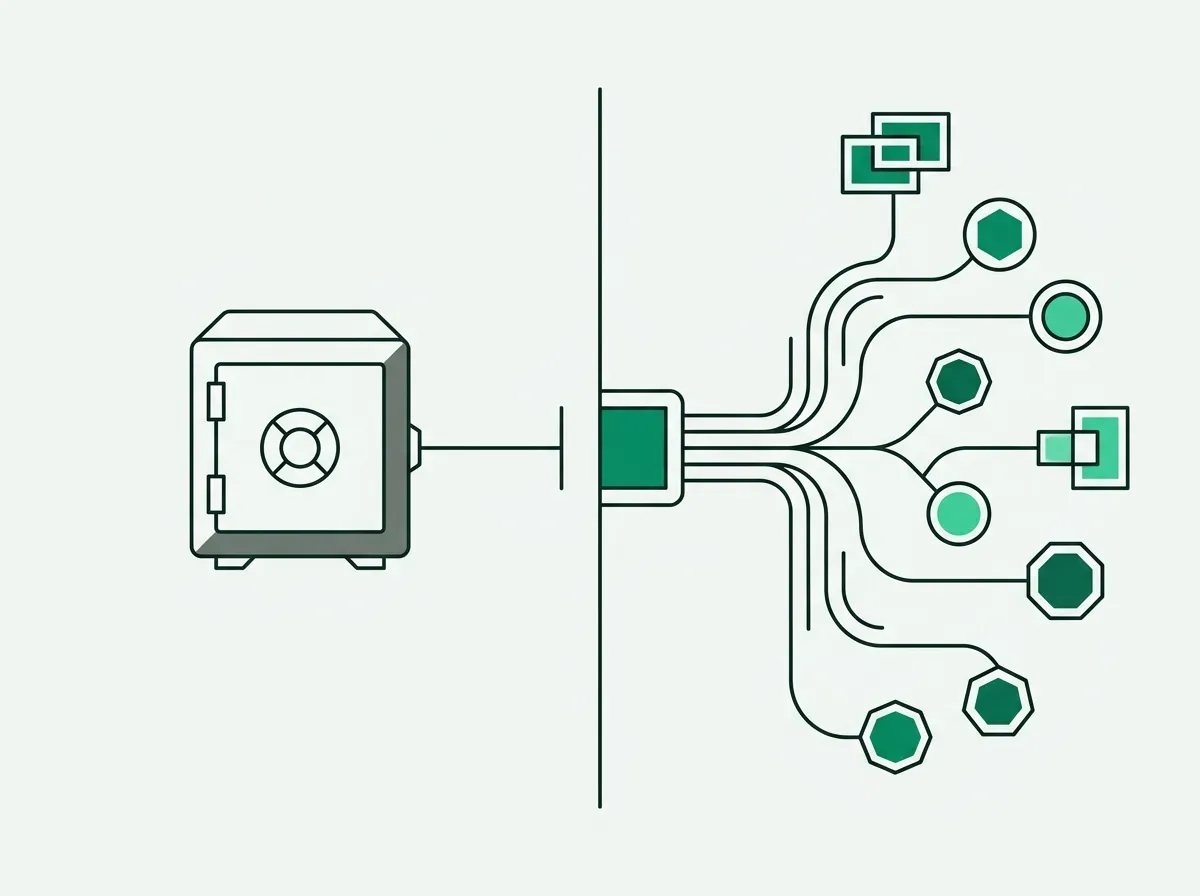
Apollo and Clay approach outbound prospecting from opposite technical premises. Apollo is an all-in-one platform pairing a proprietary 275M+ contact database with native sequence execution. Clay is an orchestration canvas that connects multiple third-party data vendors, custom web scrapers, and AI models through sequential waterfall logic without storing a native directory.
Apollo centralizes the outbound workflow inside a single interface. When a sales representative searches for target accounts, the query runs against Apollo's indexed catalog of 275 million contacts and 60 million companies. Once contacts are identified, reps reveal email addresses, push them into built-in multi-step email cadences, and dial phone numbers through an integrated VoIP dialer. The entire operational loop occurs within one vendor ecosystem.
Clay takes an open-orchestration approach, as detailed in Vanderbuild's analysis of Clay's architecture. The platform contains no native contact repository. Instead, users import account lists or company domains and build programmable tables that query external data vendors via API. A single Clay table can verify an email through Hunter, fall back to Prospeo if empty, query Datagma for a mobile number, and run an AI research prompt through Claude or OpenAI. We detail the mechanics of multi-vendor querying in our breakdown of waterfall enrichment vs browser intelligence, while Miniloop's B2B enrichment guide explains how these multi-step workflows function in practice.
This division determines the technical overhead required from your team. Apollo functions as an off-the-shelf sales application with minimal setup time. Clay functions as a development canvas for GTM engineers, requiring table configuration, formula logic, and outbound webhook routing to external tools like Smartlead or Instantly.
Clay vs Apollo Feature and Workflow Matrix
The following table compares the functional boundaries, enrichment logic, and operational requirements of Apollo and Clay based on platform specifications verified in August 2026.
| Operational Dimension | Apollo.io | Clay.com |
|---|---|---|
| Primary Category | All-in-one B2B database and sales engagement suite | Waterfall data orchestration and enrichment layer |
| Proprietary Database | Yes (275M+ contacts, 60M+ companies) | No (aggregates external vendor APIs) |
| Waterfall Enrichment | No (queries single internal index) | Yes (cascades across 150+ enrichment providers) |
| Email Match Rates | 70%–80% single-source baseline (Cleanlist 2026 benchmark) | 85%+ across multi-provider waterfall chains |
| Native Outbound Sequencer | Yes (multi-step email, tasks, native dialer) | No (exports to Smartlead, Instantly, or HubSpot) |
| AI Agent Research | Basic AI email copywriter and persona filters | Claygent web-scraping agents and LLM columns |
| Licensing Unit | Per seat per month (scales with sales headcount) | Per workspace per month (unlimited team seats) |
| Starting Annual Price | $49/user/month (Basic plan, billed annually) | $167/workspace/month (Clay pricing) |
| Credit Expiration Policy | Strict monthly reset (no unused rollover) | Rollover up to 2× monthly plan limit |
| Technical Setup Required | Low (standard filter-based prospecting) | Moderate to High (requires API mapping and formulas) |
Pricing Mechanics: Seat Licensing vs. Consumption Metering
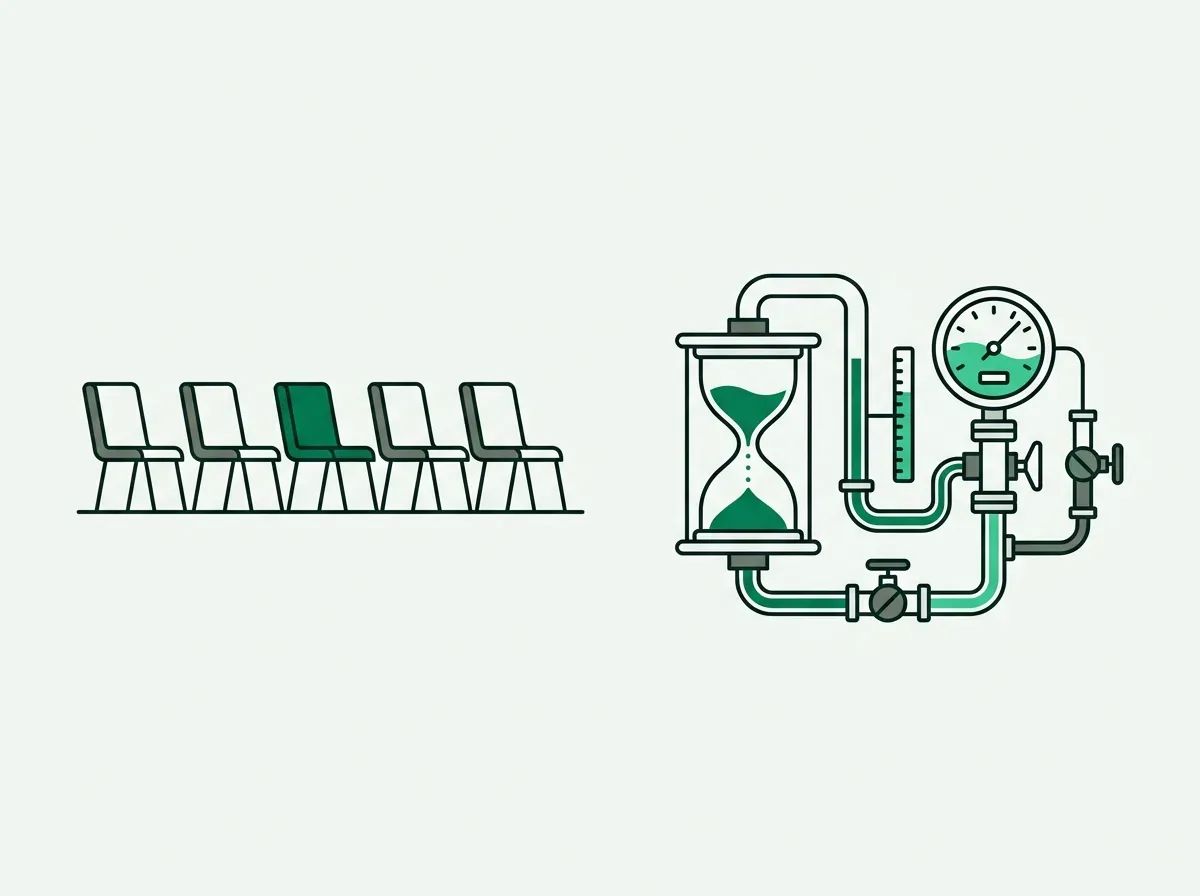
Evaluating the true operational cost of Apollo and Clay requires distinguishing between per-seat software licensing and usage-metered data consumption. Apollo charges per individual user login with strict monthly credit expirations, while Clay provides unlimited team seats and meters workspace consumption across Data Credits and background platform Actions.
Apollo Pricing Architecture
According to Apollo's published pricing schedule (checked August 2026), subscription plans scale on a per-user, per-month basis:
- Free ($0): 1 seat, 10 export credits per month, 5 mobile credits per month, 10,000 email reveals per month on corporate domains, and 2 active email sequences.
- Basic ($49/user/month billed annually, or $59 monthly): 1,000 export credits per month, 75 mobile reveals per month, unlimited in-app email reveals subject to fair-use policies, and unlimited sequences.
- Professional ($79/user/month billed annually, or $99 monthly): 2,000 export credits per month, 100 mobile reveals per month, unlimited email reveals, built-in US dialer, and custom field tracking.
- Organization ($119/user/month billed annually, or $149 monthly, minimum 3 seats): 4,000 export credits per month, 200 mobile reveals per month, international dialer access, and advanced CRM synchronization. Minimum annual base commitment is $4,284/year across 3 seats. According to SaaS procurement data from Vendr (tracking 87 transactions), Apollo enterprise contracts average $19,004 per year.
A key operational constraint in Apollo is its credit reset policy. Mobile and export credits expire at the end of each monthly billing cycle without rollover. Teams that experience seasonal prospecting cycles lose unused credit allocations, and additional data credits outside plan allotments cost $0.20 per credit in increments of 250 credits.
Clay Pricing Architecture
Clay operates a dual-metered system that prices data lookups and compute steps separately. As outlined in the Clay plans and billing guide, the actions and data credits documentation, and Revenueflow's breakdown of Clay tiers, Clay provides unlimited user seats across all plans, charging for monthly Data Credits and platform Actions:
- Free ($0): 100 Data Credits, 500 Actions per month, and a 200-row table limit.
- Launch ($167/month billed annually, or $185 monthly): 2,500 Data Credits, 15,000 Actions per month, 50,000-row limits, and phone data access.
- Growth ($446/month billed annually, or $495 monthly): 6,000 Data Credits, 40,000 Actions per month, Webhooks, HTTP API enrichment, and CRM integrations.
- Enterprise (Custom annual contract): Dedicated compute instances, custom credit pools, workbook permissions, and volume discounting documented in the Clay internal pricing memo. According to SaaS procurement benchmarks from Vendr across 80 completed enterprise purchases, Clay enterprise contracts carry a median contract value of $40,500 per year (with observed ranges from $16,044 to $117,900/year).
Clay calculates Data Credits for third-party vendor lookups (typically 1 credit per successful match, with failed queries returning no charge) and Actions for platform compute tasks like formula calculations and scraping runs. Unlike Apollo, standard Clay tiers allow unused monthly credits to roll over up to double the monthly allocation. However, deeply nested waterfall chains consume credits rapidly across large lists, a dynamic we examine in our analysis of credit-based pricing models and how per-credit pricing degrades lead lists.
| Commercial Variable | Apollo.io | Clay.com |
|---|---|---|
| Billing Metric | Per User Seat / Month | Per Workspace / Metered Consumption |
| Annual Base Entry | $588 per user / year (Basic tier) | $2,004 per workspace / year (Launch tier) |
| Seat Expansion Cost | Requires new license per added rep ($49–$119/mo) | $0 (unlimited team members included) |
| Credit Expiration | Monthly reset; no rollover | Rollover allowed up to 2× monthly quota |
| Primary Cost Escalator | Headcount expansion and mobile dials | List volume and multi-step waterfall depth |
Data Decay, Verification Risks, and Buying Signal Limits
Both Apollo and Clay rely on third-party aggregations that pull from pre-scraped web indexes, commercial registries, and vendor APIs. While these systems simplify initial list building, they operate downstream of rapid data decay and struggle to detect real-time behavioral buying signals.
Enterprise B2B contact data decays at 22.5% to 30% annually according to research from ZoomInfo and HubSpot, as professionals change companies, teams reorganize, and corporate email routing configurations shift. We have examined the structural reasons behind this in our post on why B2B data decays by over 30% annually. Static database records that are even 60 days old frequently fail delivery checks.
Deliverability risks are compounded by catch-all email domains. According to BounceZero's deliverability benchmark of 10.2 million verifications across 293,000 domains (July 2026), 33.1% of verification attempts hit catch-all domains, making SMTP-level mailbox checks inconclusive without sending a live message. Platform audits from ZeroBounce and Clearout similarly confirm that between 15% and 25% of typical B2B prospecting lists consist of catch-all addresses. Because standard SMTP handshakes cannot verify individual mailboxes on catch-all servers, static database validation flags routinely breach the 2% hard-bounce threshold enforced by major email service providers.
Furthermore, static firmographic databases cannot reveal timely purchase timing. Knowing that an account uses AWS or employs 200 engineers does not indicate that their engineering team is actively migrating databases this week. Real purchase intent appears across live platforms: engineering questions on Reddit, hiring requirements on niche job boards, and organizational announcements on LinkedIn. For a deeper analysis of these signals, read our breakdown of nine buying signals you cannot get from a contact database.
To capture fresh buying signals without relying on decaying database records, GTM teams use browser-native agents. Drevon runs locally on your Mac, using your authenticated sessions to inspect primary web pages, verify active intent, and link every prospect claim to an exact source URL. For teams reviewing architectural boundaries, our guide on Clay vs Drevon for intent discovery explains the distinction between API-based enrichment and primary-source research.
Stack Selection Guide: When to Choose Apollo, Clay, or Both
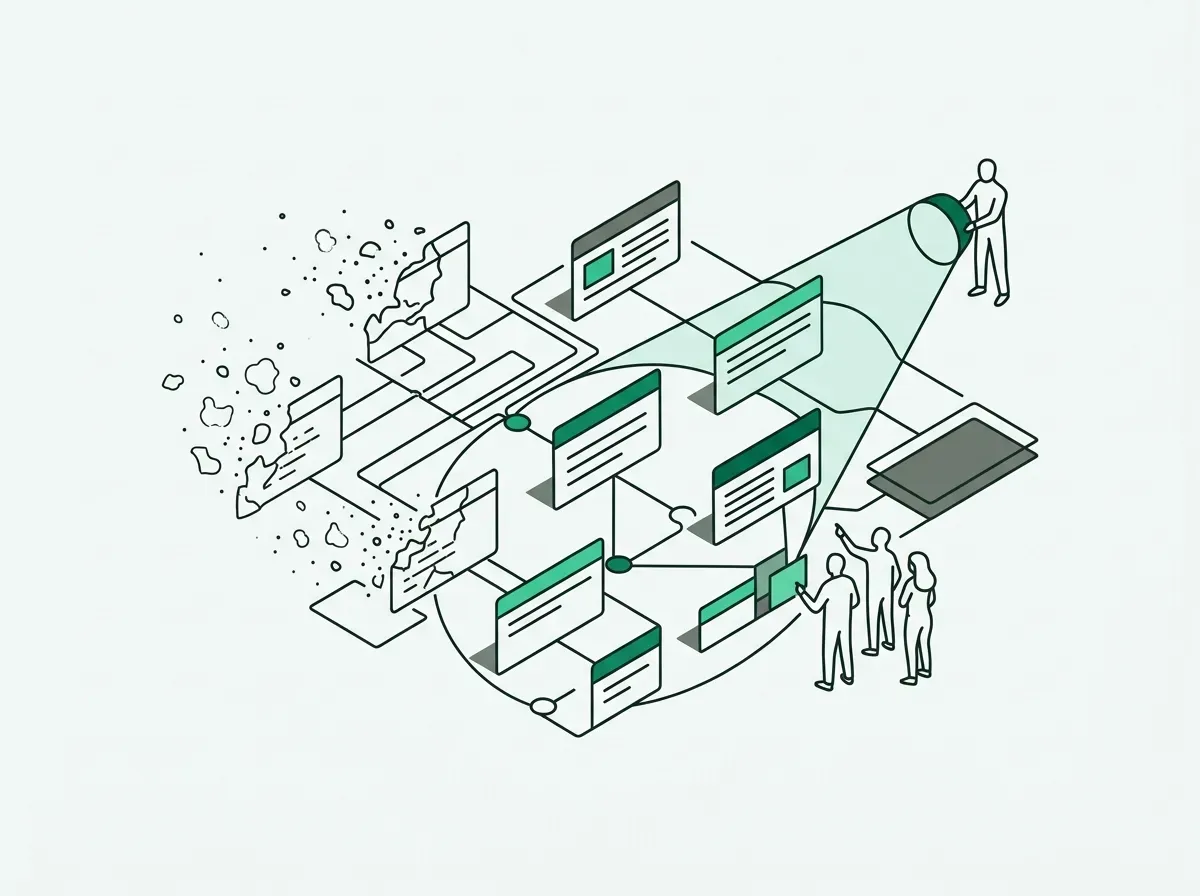
Choosing between Apollo, Clay, or a combined outbound stack depends on your technical team capacity, monthly list volume, and enrichment requirements.
Scenario 1: Deploy Apollo for Turnkey Sales Outbound
Apollo is the practical choice for early-stage sales teams, founder-led outbound motions, and organizations without dedicated revenue operations engineers. If your core goal is to filter standard B2B personas, obtain corporate email addresses, and launch automated outbound email sequences from a single screen, Apollo delivers low operational friction and predictable per-seat monthly costs.
Scenario 2: Deploy Clay for Multi-Vendor Enrichment and Custom AI Logic
Clay is necessary when outbound performance depends on achieving the highest possible match rates across difficult verticals, or when qualification requires complex web scraping. If standalone databases fail to return verified emails for your niche ICP, configuring a waterfall across Hunter, Prospeo, and Dropcontact in Clay closes coverage gaps. Clay is also required when you need AI agents to inspect company websites for specific technical criteria before initiating outreach. We cover related automation workflows in our hands-on GTM tool comparison of Clay, Apollo, and Bardeen.
Scenario 3: The Hybrid Stack (Apollo Inside Clay via BYOK)
Growth teams often connect both platforms by integrating their Apollo API key directly into Clay tables using Bring-Your-Own-Key (BYOK). In this setup, Apollo acts as the low-cost first-pass provider for raw contact data. If Apollo returns an unverified email or empty record, Clay automatically cascades the lookup to secondary vendors. Final enriched leads are then exported via webhooks into dedicated cold email tools like Smartlead or Instantly.
Scenario 4: Live Browser Research for High-Intent Prospecting
When selling high-ACV enterprise software, static list outreach produces low reply rates if timing is unverified. Reaching prospects based on live technical discussions, hiring spikes, or active software dissatisfaction yields higher conversion than cold database filtering. Using local desktop agents to extract active signals from Reddit and LinkedIn gives teams verified proof of intent before outreach begins. Learn how to track these discussions in our tutorial on finding B2B buying signals on Reddit.
Frequently Asked Questions
Can Clay replace Apollo entirely?
Clay can replace Apollo's data enrichment functions, but it does not replace Apollo's native outreach execution. Clay does not provide a native contact database, direct dialer, or email sequencing engine. Teams using Clay typically connect external outbound tools like Smartlead, Instantly, or HubSpot to send campaigns after enrichment tables are built.
How do Clay credits work compared to Apollo export credits?
Apollo provides fixed monthly export and mobile credits per user seat that expire at the end of each billing cycle without rollover. Clay meters usage across Data Credits (for third-party enrichment calls) and platform Actions (for computational steps) pooled at the workspace level. Clay allows unused credits on paid plans to roll over up to double the monthly allocation.
What is the email match rate difference between Apollo and Clay?
Cleanlist's 2026 benchmarks show Apollo achieves single-source email coverage between 70% and 80% on standard B2B contacts. Clay achieves aggregate match rates exceeding 85% by chaining multiple data providers sequentially in a waterfall table, querying secondary vendors whenever the initial provider returns an unverified result.
Can I use my Apollo subscription inside Clay?
Yes. Clay allows users to integrate their Apollo API key directly via Bring-Your-Own-Key (BYOK). This configuration lets you query your Apollo account directly from Clay table columns, using your Apollo plan limits before triggering secondary paid enrichment steps in Clay.
What is the best alternative for live, evidence-backed intent research?
For teams that need real-time buying signals rather than static database lists, Drevon provides a local-first alternative. Drevon runs AI research agents inside your local browser to identify qualified accounts across LinkedIn, Reddit, and job boards, linking verifiable primary source URLs to every claim without third-party data contracts.
To start uncovering verified buying signals directly from your own browser sessions without credit barriers, download Drevon free for macOS today.