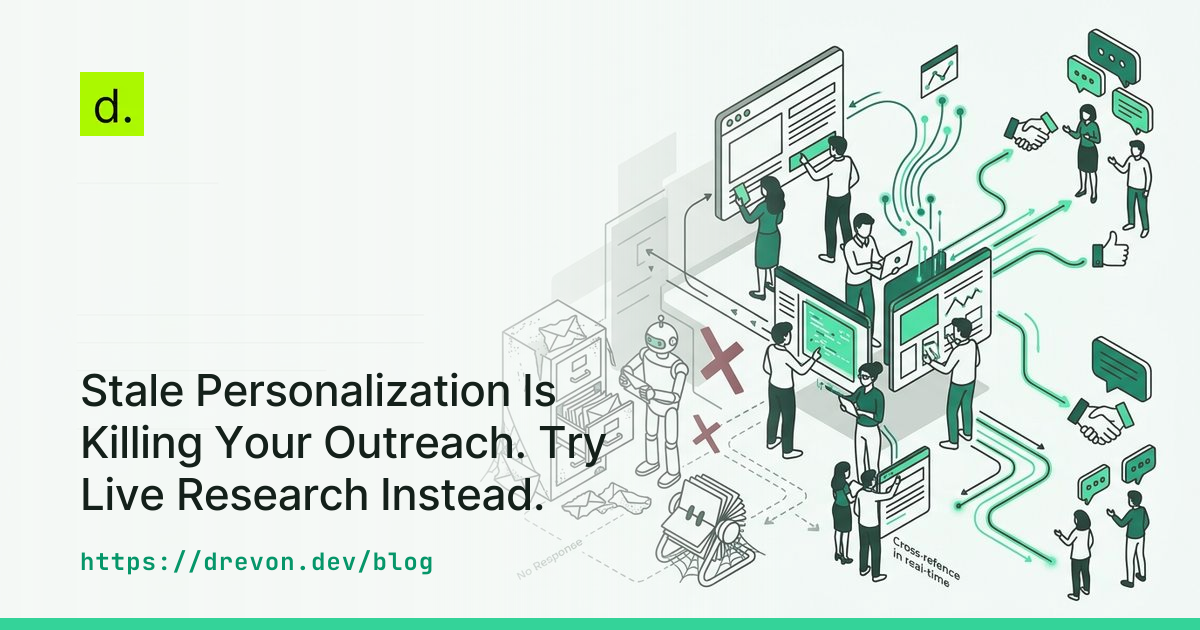
Stale Personalization Is Killing Your Outreach. Try Live Research Instead.
Stale Personalization Is Killing Your Outreach. Try Live Research Instead.
Your Personalization is Stale
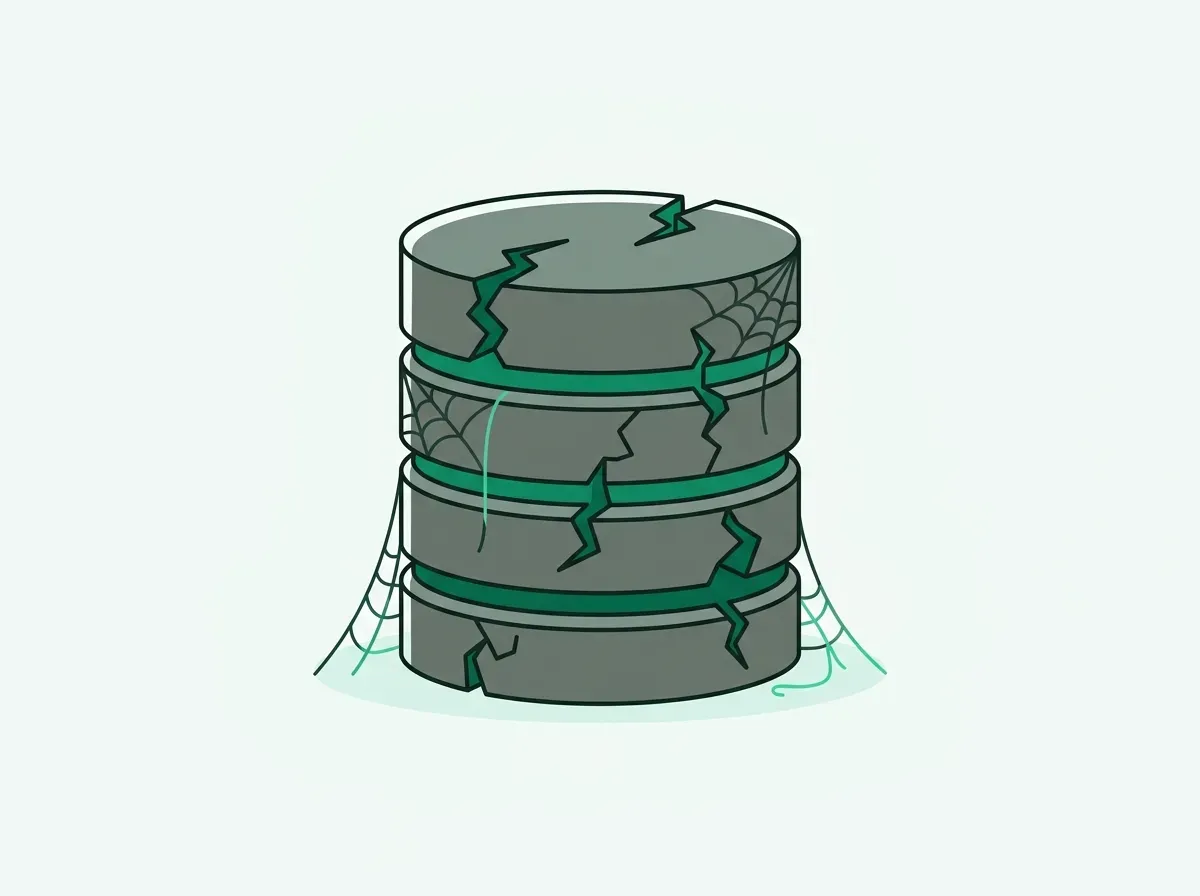
Most cold outreach personalization fails because it relies on stale information. The average cold email reply rate dropped from 6.8% in 2023 to 5.8% in 2024, partly because buyers have learned to ignore low-effort personalization pulled from static databases. Information like job titles, company size, or old funding announcements is now table stakes, and often incorrect.
B2B marketing data decays at a rate of 22.5% annually. This means that within a year, over a fifth of your contact information is obsolete. This is why a line like, “Saw you’re the VP of Marketing at Acme,” feels generic; it references a fact, not a priority. A Gartner survey found that 73% of B2B buyers actively avoid suppliers who send irrelevant outreach. Stale data leads to irrelevant outreach, which gets deleted.
Live Research vs. Static Data
Static data tells you who a person was. Live research tells you what they are doing now. Instead of pulling from a database, live research analyzes real-time activity: recent LinkedIn posts, comments on Reddit, new company job postings, or quotes in articles. These signals reveal current pain points and strategic priorities—the actual triggers for a purchase.
Companies that act on these real-time signals see significant results. For example, the conversational marketing platform Drift increased its sales opportunities by 160% month-over-month by combining website activity with third-party intent signals to personalize its outreach. This approach works because it connects your solution to a problem the prospect is actively working to solve today, not a problem they had six months ago.

Personalization Lines from LinkedIn Activity
LinkedIn is a stream of professional priorities. A prospect’s activity shows what is on their mind right now.
Based on a shared connection's post they engaged with.
“My colleague John Smith just posted about migrating to a new data warehouse, and I noticed you flagged the challenge of data integrity in the comments. Many of our partners face the same issue.”
Based on a comment they left.
“I saw your comment on Jane Doe's post about CI/CD pipelines. It looked like you're exploring ways to reduce build times, which is something we specialize in.”
Based on a post they wrote.
“Your recent post on scaling engineering teams—specifically your point about developer autonomy—is why I'm reaching out. We've been focused on that problem for teams like yours.”
Personalization Lines from Company Signals
A company’s public announcements and hiring plans are a road map of their immediate needs.
Based on a quote from their CEO in an interview.
“I read your CEO's interview in TechCrunch where she mentioned expanding into the APAC market in Q4. My team specializes in GTM for that region and I had a few thoughts.”
Based on a recent case study they published.
“Your new case study with [Customer Name] was impressive, especially the results you drove in the first 60 days. It suggests your team prioritizes quick time-to-value.”
Based on a new job posting.
“Saw you're hiring a Senior Product Manager for user onboarding. We helped [Similar Company] cut their new user churn by 15% with a similar focus on the first-run experience.”
Personalization Lines from Community and Forum Activity
Niche communities like Reddit, Hacker News, or industry forums are where people ask for help with specific, pressing problems.
Based on an open-source contribution.
“I noticed your recent contribution to the OpenTelemetry project on GitHub. We're working with other companies standardizing on OTel that are facing challenges with data correlation.”
Based on an industry forum comment.
“Your point in the GrowthHackers forum about the diminishing returns of paid social was spot on. Many of our customers are solving that by focusing on community-led growth.”
Based on a question on Reddit.
“Found your question on r/sysadmin about managing multi-cloud environments. It's a common issue, and we've built a specific workflow to address the cost-control aspect you mentioned.”
Personalization Lines from Their Published Content
When a prospect writes an article, appears on a podcast, or gives a talk, they are broadcasting their professional perspective and challenges.
Based on a conference talk.
“I watched the recording of your talk from SaaStr about building a usage-based pricing model. Your framework for identifying the right value metric was very clear, and it's similar to how we help customers structure their own pricing.”
Based on a blog post they wrote.
“Your article on 'The Future of Go-to-Market' made a strong case for moving beyond MQLs. The challenge you described around signal quality is exactly what our platform addresses.”
Based on a podcast appearance.
“Heard you on the Acquired podcast and was interested by your take on product-led sales. You mentioned the difficulty of identifying PQLs without a dedicated data team, which is a problem we're built to solve.”
Scaling Live Research
This level of research is effective. Campaigns with “advanced personalization” see reply rates of up to 18%, compared to 7-9% for generic emails. The problem is that performing this research manually is not scalable. According to one study, 42% of sales reps admit to contacting prospects without doing proper research, often because they lack the time.
To do this for hundreds of prospects would require a dedicated team of researchers. This is why we built Drevon. Our AI agents automate the process, performing live research across multiple platforms to find these specific personalization points in minutes. High-performing sales teams are 1.7 times more likely to use AI for prospecting than their peers.
You can start by testing one of these methods on your top accounts. Or you can use an AI agent to do it for your entire pipeline.