The Real Cost of an SDR vs an AI SDR — new, Okara cost cluster
A sales development representative in B2B SaaS carries a fully loaded annual cost between $110,500 and $165,000 while spending less than one-third of their working hours actively selling. When growth teams evaluate an AI SDR versus a human rep, comparing headcount against software licenses requires examining total unit economics: base compensation, ramp delays, management overhead, secondary domain infrastructure, and data decay rates.
At Drevon, we track the engineering inputs required to create qualified outbound pipeline. Growth engineers and sales leaders can download our free desktop app for Mac to run local, evidence-backed account research without recurring per-seat database subscriptions or third-party AI markups.
TL;DR
- A human SDR costs between $110,500 and $165,000 per year when factoring in salary, employer taxes, management overhead, and software seat licenses.
- Commercial AI SDR platforms charge between $7,200 and $60,000 annually while requiring an additional $2,000 to $8,000 per year for secondary domains, mailbox warmup networks, and verification APIs.
- According to industry benchmarks, human SDR quota attainment fell to 60% with average ramp times extending past three months.
- List quality determines outbound conversion: trigger-based outreach backed by verifiable primary source URLs delivers 6% to 18% reply rates compared to sub-2% on static title lists.
- Local-first AI research agents remove credit barriers by executing live browser queries with the AI subscriptions teams already own.
The Fully Loaded Cost of a Human SDR
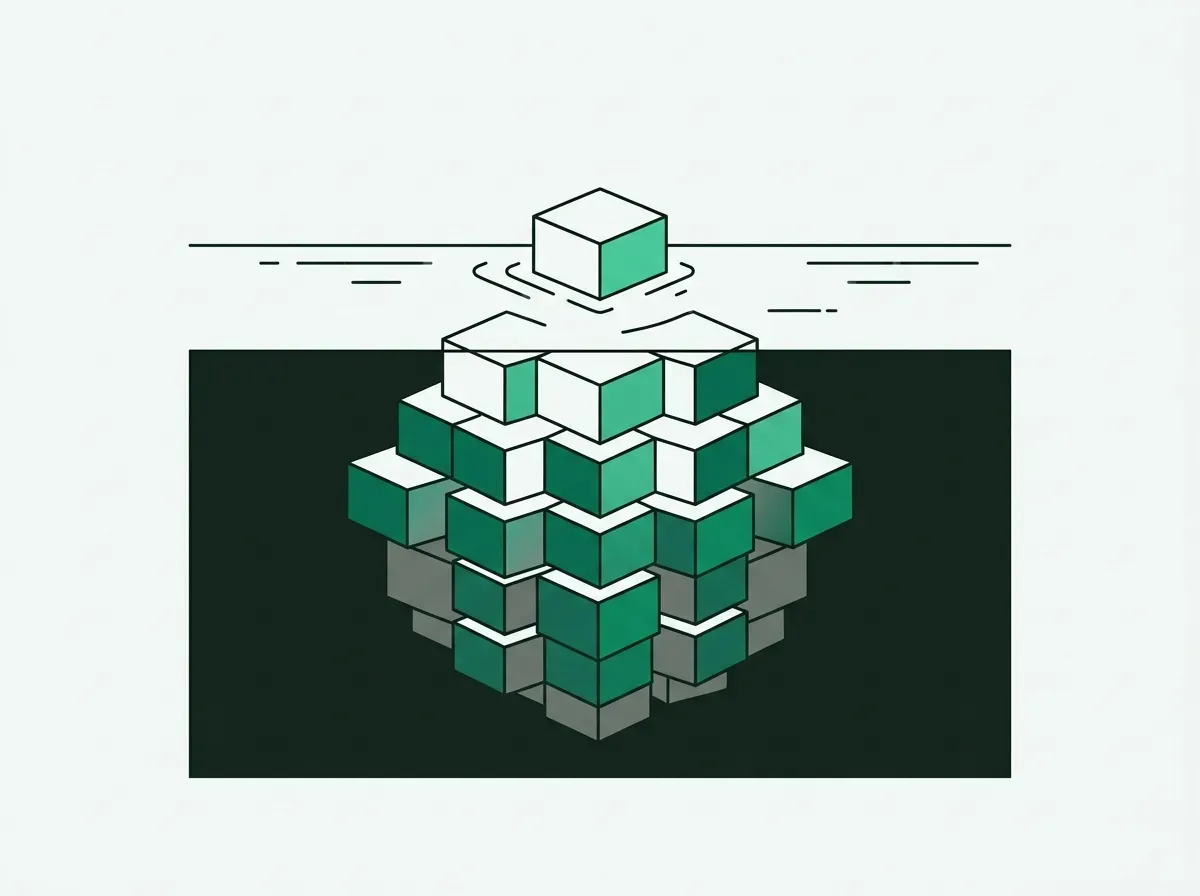
A human SDR costs an organization between $110,500 and $165,000 per year, which represents 1.7x to 2.2x base salary once mandatory overhead is accounted for. Direct base salary represents only a portion of the balance sheet commitment required to maintain an active outbound sales representative.
According to research from The Bridge Group's 2025 SDR Metrics Report (surveying 351 B2B companies), the national median base salary for an SDR is $60,000, with median on-target earnings (OTE) reaching $85,000 across a 64/36 base-to-variable split. Data compiled in the Prowi SDR Compensation Guide and CaptivateIQ SDR compensation benchmarks indicates enterprise tech SDR positions in major metro areas reach $100,000 to $120,000 OTE.
Beyond cash earnings, standard employer costs compound significantly:
- Taxes and Benefits Burden: U.S. Bureau of Labor Statistics Employer Costs for Employee Compensation data shows that benefits and mandated payroll taxes contribute 30.1% on top of cash wages ($18,000 to $25,000 per year).
- Management Allocation: With average front-line manager-to-rep ratios sitting between 6.4:1 and 8:1, allocated sales management compensation adds $15,000 to $22,800 annually per SDR.
- Ramp Inefficiency: Average ramp time is 3.0 to 3.2 months. During this quarter, the business pays full base salary while pipeline creation remains near zero.
- Turnover and Attrition: Median SDR tenure is 17.6 months with annual turnover at 40%, meaning hiring cycles repeat roughly every 1.5 years as analyzed in the MarketBetter SDR Turnover Cost Study.
- Software Tool Stack: Supplying a rep with Salesforce or HubSpot Enterprise, LinkedIn Sales Navigator ($89/month), ZoomInfo or Apollo ($300 to $500/month), and an outbound email sequencer adds $4,800 to $8,500 per seat annually.
When quota attainment sits at 57% to 60%, the median cost per SDR-booked meeting reaches $766, with cost per closed-won deal climbing past $11,000. For a complete look at these hidden line items, see our breakdown on the integration tax of GTM infrastructure.
Commercial AI SDR Pricing Models and Hidden Multipliers
Commercial AI SDR platforms charge base subscription fees between $7,200 and $60,000 annually, but supplementary mailbox infrastructure, domain routing, and data credits increase operational expenses by 30% to 50%. Evaluating total cost requires accounting for all outbound delivery systems.
Autonomous outbound vendors structure their pricing across three models:
- Mid-Market & Assisted AI Tools: AiSDR pricing (checked August 2026) offers an entry Solo tier at $250/month for 200 contacts, an Explore tier at $900/month (or $720/month billed annually at $8,640/year) for 1,200 search credits and 1,200 AI messages across 6 mailboxes, and a Grow tier at $2,000/month billed annually ($24,000/year).
- Sales-Gated Digital Worker Platforms: Artisan AI pricing (checked August 2026) scopes its Ava agent based on contact volume, with self-serve entry contracts starting at $600/month ($7,200/year) and full enterprise configurations running $24,000/year on 12-month commitments. Human dialer add-ons cost $75/seat/month.
- Enterprise Autonomous Agents: 11x Alice pricing (checked August 2026) starts its Growth tier at $36,000/year ($3,000/month billed annually), with enterprise onboarding configurations ranging between $45,000 and $60,000/year.
Operating high-volume automated sending systems adds unavoidable technical overhead:
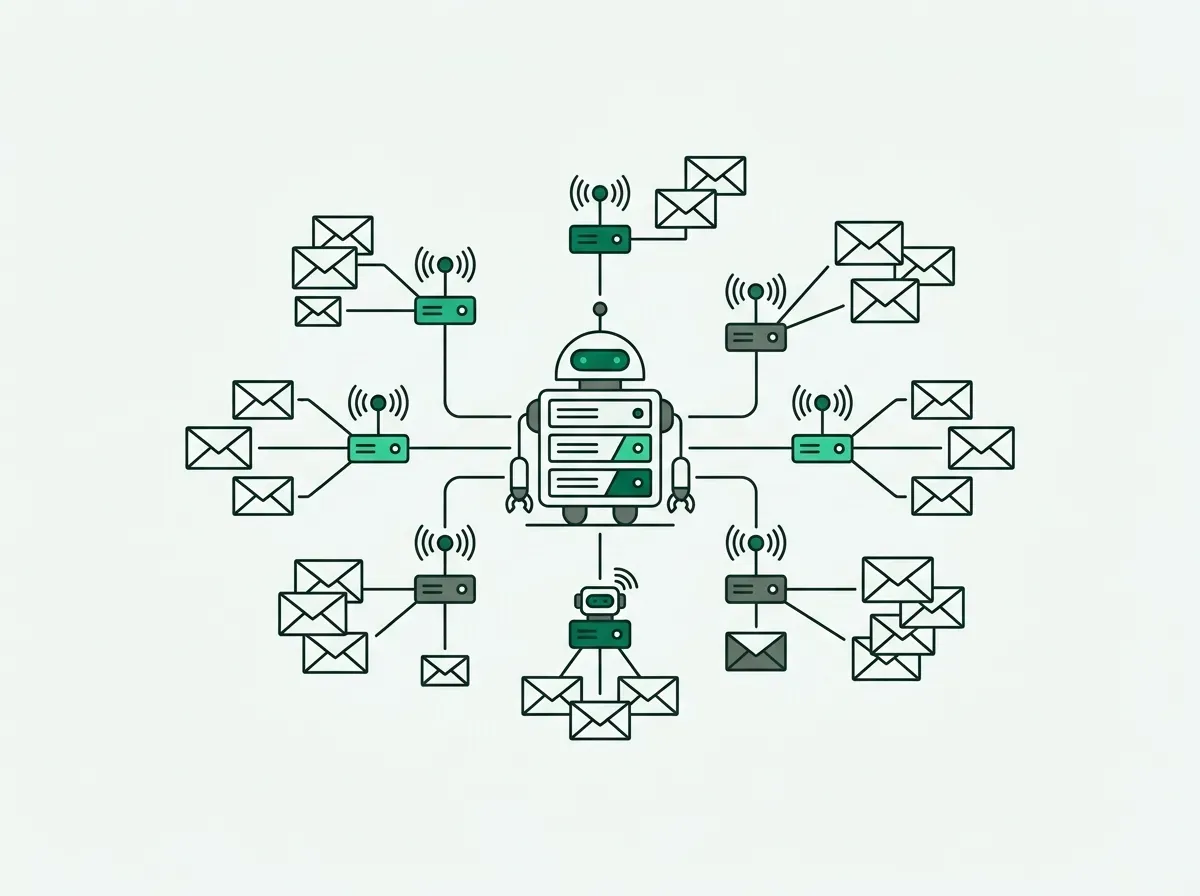
- Secondary Domain Fleets: High-volume outbound requires 15 to 25 secondary domains ($180 to $360/year) to prevent damage to root corporate domains.
- Mailbox Hosting: Provisioning 30 to 80 dedicated Google Workspace or Microsoft 365 accounts costs $180 to $480 monthly ($2,160 to $5,760/year).
- Warmup and Monitoring: Inbox deliverability tools and automated rotation services add $100 to $200 per month.
- List Verification APIs: Cleaning lists via third-party verification tools adds $50 to $150 per month to maintain bounce rates below provider thresholds.
When contact lists decay, AI agents send unverified messages to stale addresses, increasing spam complaint rates above the 0.30% provider ceiling. We analyze the financial effects of this exhaustion in our analysis on how credit-based pricing penalizes discovery and how per-credit pricing degrades your lead lists.
Comparing Human SDRs, Cloud AI SDRs, and Local Research Agents
Comparing human sales development reps, cloud AI SDR platforms, and local browser research agents reveals distinct trade-offs across capital cost, setup time, and data accuracy. Human reps offer strategic conversation depth, cloud AI SDRs offer volume, and local research agents supply verified intent signals directly to closing reps.
According to findings in Gartner's survey on AI-enabled sales growth, sales teams that provide reps with concrete context and next-best actions are 2.6 times more likely to achieve commercial growth. However, Salesforce State of Sales research indicates reps lose 70% of their working hours to administrative tasks and manual account qualification rather than selling.
The table below summarizes the operational and financial profile of each prospecting model:
| Evaluation Dimension | Human SDR Seat | Cloud AI SDR Platform | Local Research Agent (Drevon) |
|---|---|---|---|
| Annual Base Software / Cash | $60,000 Base / $85,000 OTE | $7,200 to $36,000+/year | $0 (Free macOS desktop app) |
| Loaded Infrastructure Overhead | $50,500 – $75,000/yr (Taxes, tools, leadership) | $2,000 – $8,000/yr (Domains, inboxes, warmup) | $0 (Runs in user's browser via existing AI keys) |
| Total Annual Real Cost | $110,500 – $165,000 | $9,200 – $44,000+ | $0 software fee |
| Ramp Time to Productivity | 3.0 to 3.2 months | 2 to 4 weeks (Prompt setup & warmup) | Immediate (10-minute research run) |
| Research Speed per 20 Accounts | 3 to 5 hours | 5 to 15 minutes (Static database pull) | 8 to 12 minutes (Live web search) |
| Source Verification | Variable (Manual diligence) | Low (Database scrape; field hallucination) | High (100% verified source URLs) |
Commercial databases decline in accuracy rapidly. As documented in our research on why B2B data decays by over 30% annually, static contact records quickly turn into bounce risks. Local browser agents inspect active Reddit forums, company job pages, and recent announcements in real time without querying stale caches.
We demonstrated this research compression when we ran the same prospecting brief through Drevon and a manual SDR, finding that browser agents delivered comparable research depth in 10 minutes instead of several hours.
Why List Quality Dictates Outbound Economics
Outbound economics depend on target account intent rather than message volume. High-volume cold campaigns generated from broad filter lists experience low conversion rates, whereas campaigns triggered by verified buying signals produce sustainable meeting rates.
Data from Gartner's sales survey on B2B buyer preferences reveals that 61% of business buyers prefer a rep-free evaluation when interactions lack contextual relevance. When an AI SDR contacts 5,000 scraped records based only on job titles, response rates average 1.0% to 1.7%. Generating 30 replies requires consuming thousands of credits and risking domain deliverability.
Conversely, signal-led outreach targets accounts exhibiting public buying triggers, such as tech stack migration questions on Reddit, critical role vacancies, or newly funded expansion initiatives. Outbound response benchmarks indicate that intent-backed messaging yields 6% to 18% reply rates and higher opportunity progression rates.
Revenue leaders evaluate three economic models for pipeline generation:
- Manual SDR Prospecting: High meeting cost ($300+), high message personalization, low account throughput (30 to 45 accounts daily).
- Cloud AI Cold Sequences: Low unit cost per send, high domain attrition risk, low conversion on complex accounts.
- Evidence-Backed Signal Discovery: Low marginal cost, verified public source URLs, immediate account qualification.
Grounding every outreach reason in an authentic web link establishes immediate relevance. When messages reference an active forum post or a live job requisition, prospects recognize genuine research. This process is detailed in our guide on evidence-based prospecting and source URLs as well as our framework explaining what proof of intent really means.

Structuring a Signal-Driven GTM Stack
Constructing a high-efficiency revenue engine requires pairing human relationship skills with automated signal extraction. Enterprise contract negotiation requires experienced account executives, while account discovery and intent monitoring are best handled through GTM engineering.
Organizations can optimize resource allocation across account segments:
- Reserve Direct Account Executives for Complex Accounts: For deals with average contract values above $40,000 that involve multi-stakeholder buying committees, experienced closers handle direct discovery and negotiations.
- Automate Trigger Detection: Mid-market segments with clear trigger events (such as funding milestones or hiring spikes) run on automated data extraction routines.
- Hire a GTM Engineer Instead of Expanding SDR Headcount: Rather than hiring multiple junior reps, forward-thinking teams employ a GTM engineer. This operator configures browser agents to feed qualified, intent-backed accounts directly to closers.
Teams can implement this framework using our guide to building a signal-based engine without intent data vendor contracts. Combining browser-based agents with existing AI accounts enables teams to find active buyers without taking on long-term software retainers.
Frequently Asked Questions
What is the average ramp time for a new SDR?
According to The Bridge Group's 2025 SDR Metrics Report, the average ramp time for a B2B SaaS SDR is 3.0 to 3.2 months. During this period, the company incurs full base compensation and software costs while the rep produces minimal pipeline.
How much does an SDR outbound tech stack cost per month?
An SDR tech stack costs between $310 and $450 per seat monthly for lean configurations, and $714 to $899+ per month for enterprise stacks incorporating Salesforce, LinkedIn Sales Navigator, ZoomInfo, and Outreach.
Why do cloud AI SDR tools require secondary domains?
Cloud AI SDR platforms generate high sending volumes that increase deliverability variance and spam flags. To protect corporate email reputation, teams operate 15 to 25 secondary domains and separate mailboxes to isolate outreach from primary corporate communications.
Can an AI SDR replace an entire sales development team?
AI SDR platforms cannot replace human reps for strategic enterprise accounts that require multi-threaded stakeholder management. However, local AI research agents automate account qualification and intent discovery, enabling closing reps to source pipeline without dedicated junior SDR support.
How does Drevon differ from cloud AI SDR platforms?
Drevon is a free desktop application for macOS that runs research agents in your own browser using your existing logins and AI subscriptions. It conducts live research across LinkedIn, Reddit, and Crunchbase, producing lead lists with verified source URLs without monthly software retainers.
To start uncovering high-intent accounts backed by verifiable primary source URLs, download Drevon for Mac and run your first research pass in 10 minutes.