The ZoomInfo MCP Server vs Claude in Your Own Browser — 140/mo, goes at gtm.ai directly
TL;DR:
- The ZoomInfo Model Context Protocol (MCP) server exposes static relational database records through a hosted JSON-RPC 2.0 endpoint.
- Local browser agents execute frontier LLMs directly within authenticated web sessions to extract live buying signals from developer forums, job boards, and professional networks.
- B2B contact databases experience a 22.5% annual decay rate according to MarketingSherpa and HubSpot benchmarks, while Dun & Bradstreet records 120 address changes every thirty minutes.
- gtm.ai meters requests through dual data and AI credit balances alongside enterprise contracts averaging $33,500 annually on Vendr, whereas local execution runs on your existing LLM plan with zero per-lead data markups.
- Browser-native research returns verifiable primary source URLs for every prospect observation rather than opaque database matches.
Connecting large language models to commercial data requires choosing between hosted API gateways and direct browser execution. Drevon provides a free Mac app for sales research that coordinates prospect discovery directly inside your local browser sessions, presenting a decentralized alternative to hosted database servers like ZoomInfo's gtm.ai.
Architectural Breakdown: Hosted MCP Server vs Local Browser Execution
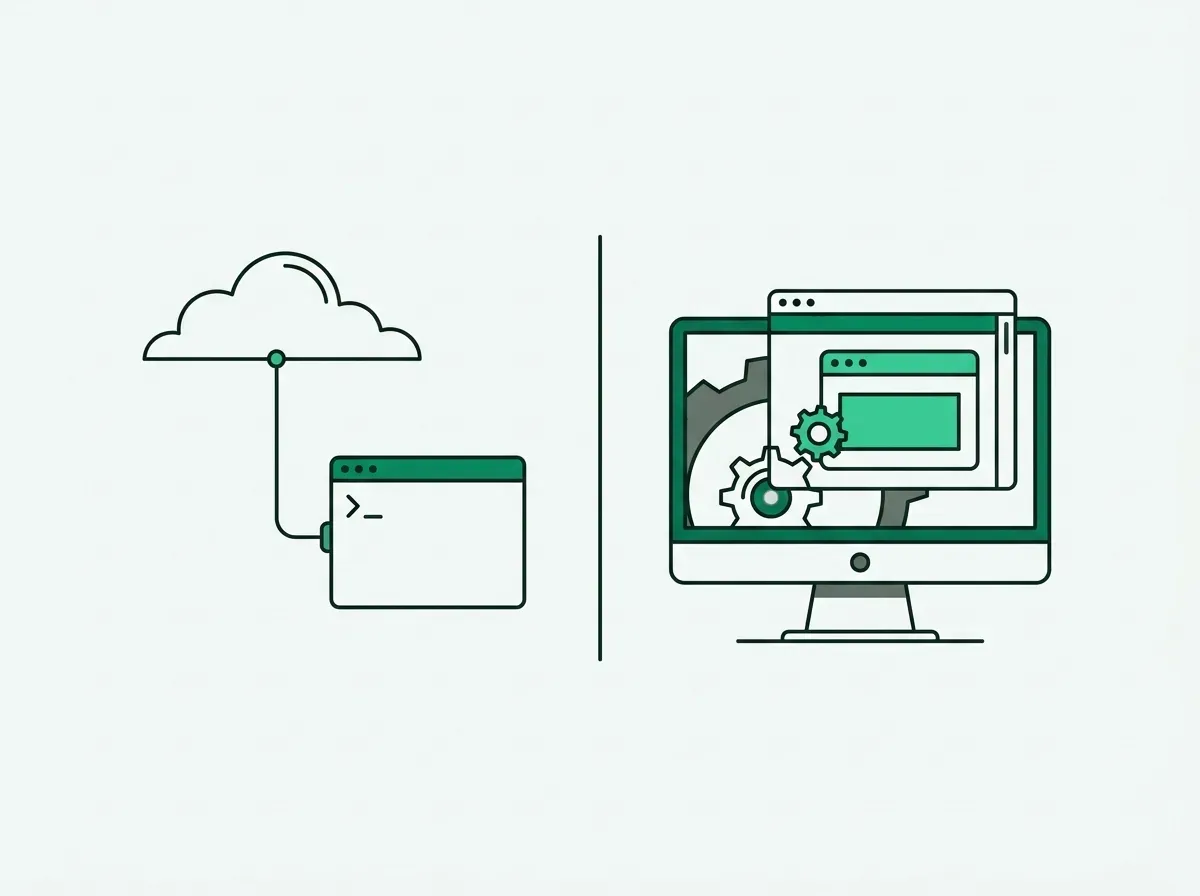
The ZoomInfo MCP server operates as a centralized cloud gateway to pre-indexed database tables, while local browser agents execute directly within your desktop environment. The MCP server provides structured JSON-RPC endpoints to remote clients, whereas local agents control live browser sessions to observe the public web in real time.
ZoomInfo launched its agent-native interface under the brand gtm.ai, hosting its remote MCP endpoint at https://mcp.zoominfo.com/mcp. According to the gtm.ai MCP documentation, this architecture operates over JSON-RPC 2.0 with remote HTTP transport. It allows clients like Claude Desktop, Cursor, and ChatGPT to call tools such as resolve-company, get_gtm_context, and search_contacts directly against ZoomInfo’s data warehouse. As detailed in technical analyses by Scalekit's ZoomInfo MCP breakdown, user authentication relies on OAuth 2.0 with PKCE or Client Credentials, tying context resolution to CRM ownership maps defined inside ZoomInfo.
By contrast, running prospect research on your desktop replaces cloud intermediaries with an Electron runtime on macOS. The engine executes sandboxed browser processes that operate within your active authenticated sessions on LinkedIn Sales Navigator, Reddit, GitHub, and job boards. Rather than querying pre-aggregated records, the local agent drives your Claude or OpenAI subscriptions via local API keys or CLI runners, reading DOM elements directly. We explored this distinction in detail when outlining why we built a browser-based agent instead of an API wrapper.
| Architectural Parameter | ZoomInfo MCP (gtm.ai) | Local Browser Execution (Drevon) |
|---|---|---|
| Execution Runtime | Centralized cloud server (mcp.zoominfo.com) |
Local sandboxed desktop process (macOS) |
| Protocol Standard | JSON-RPC 2.0 via remote HTTP transport | Direct browser automation and local LLM drivers |
| Data Surface | ZoomInfo relational database tables (~100M companies) | Live web pages, member communities, authenticated portals |
| Authentication Model | OAuth 2.0 PKCE / ZoomInfo DevPortal tokens | User-owned local browser session cookies |
| Supported Clients | Claude, Cursor, Perplexity, VS Code (gtm.ai client list) | Native desktop app driving Claude, Codex, Copilot, Gemini |
| State Persistence | Cloud-hosted GTM Context Graph | Local SQLite session database on disk |
Protocol Mechanics: JSON-RPC 2.0 vs Semantic Accessibility Tree Parsing
ZoomInfo MCP uses standardized remote procedure calls to query static relational schemas, whereas local browser agents compress live Document Object Models into semantic accessibility trees. This mechanical difference dictates how models discover information, interpret visual hierarchy, and navigate member-gated interfaces.
Under the Model Context Protocol specification, a host client discovers tools by issuing a tools/list request. ZoomInfo’s server responds with JSON schema definitions for queries like search_companies, enrich_contact, or get_intent_signals. When an agent queries a company, the LLM constructs an argument payload containing parameters like SIC codes, headcount brackets, or domain names. The cloud endpoint processes the SQL query against its indexed data warehouse and returns structured string blocks. The model never interacts with the visual interface or the primary publication source.
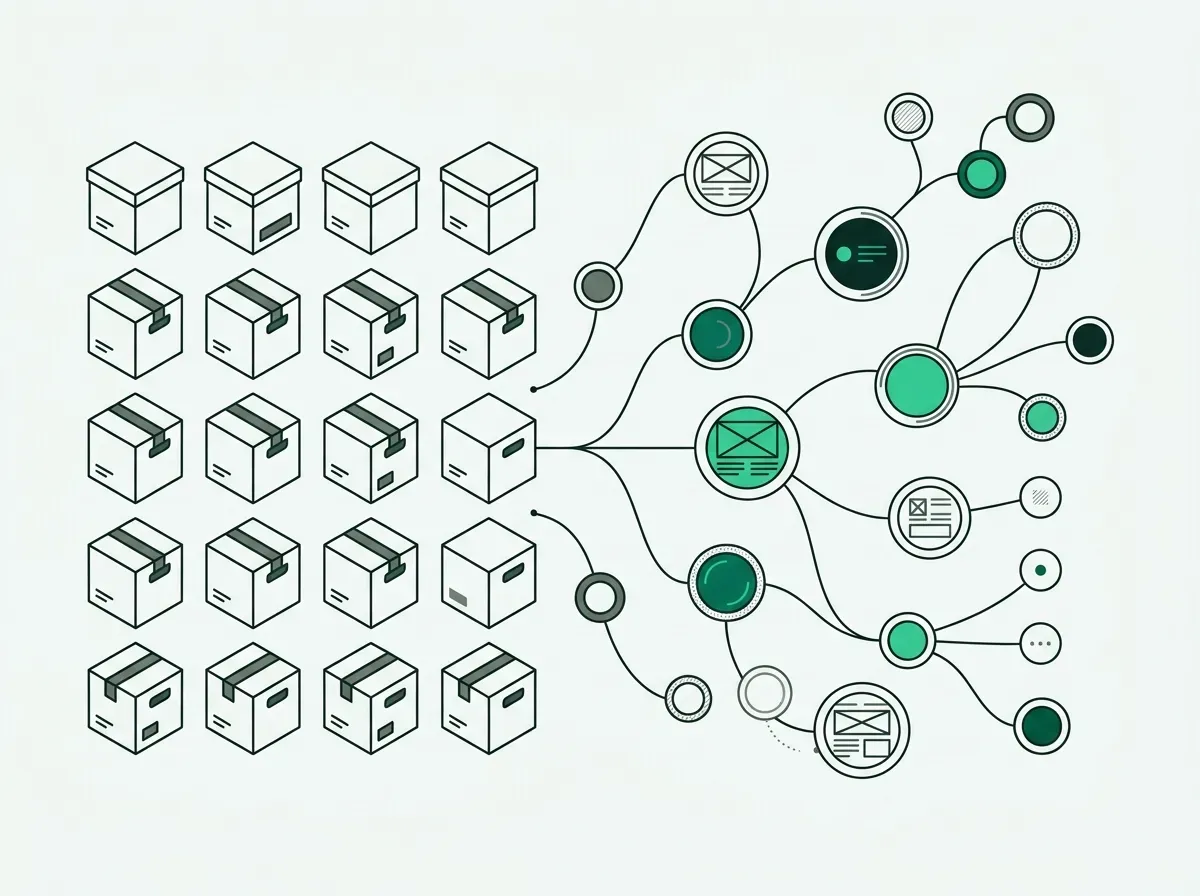
Local browser agents take a different technical approach. When evaluating dynamic web pages like Reddit discussions, GitHub issue trackers, or company careers pages, parsing raw HTML generates 3,000 to 5,000 tokens of boilerplate tags, inline scripts, and CSS styling. Browser-native agents use the Chrome DevTools Protocol (CDP) to extract the computed accessibility tree (axTree). This representation translates visual UI elements into lightweight semantic nodes (roles such as link, button, heading, and deterministic identifiers like @e1, @e2). This reduces token consumption by 85% to 93% per action step, allowing the local LLM to click, scroll, and extract structured data directly from authenticated web views.
# Computed Accessibility Tree Snapshot (agent-browser extraction)
- heading "r/sales: Anyone evaluating ZoomInfo MCP vs direct web research?" [level=1] [ref=e1]
- link "u/revops_builder" [ref=e2]
- text "We tested the hosted MCP endpoint, but stale contact records remain an issue..." [ref=e3]
- text "Posted 4 hours ago · 18 comments" [ref=e4]
Payload Comparison: JSON-RPC Responses vs Verifiable DOM Extraction
Comparing raw request and response payloads illustrates the contrast between static database lookups and live evidence collection. The ZoomInfo MCP server returns normalized relational attributes, while local browser agents output source-linked evidence packets containing verbatim context and direct URLs.
When an MCP client queries ZoomInfo for account context, it executes a standardized JSON-RPC 2.0 call over HTTP as outlined in the gtm.ai documentation:
// ZoomInfo MCP JSON-RPC 2.0 Request
{
  "jsonrpc": "2.0",
  "id": "req_zi_89102",
  "method": "tools/call",
  "params": {
    "name": "search_contacts",
    "arguments": {
      "company_domain": "metricstream.example.io",
      "job_title": "VP of Engineering",
      "limit": 1
    }
  }
}
The hosted server resolves the query against its database snapshot, returning a text-wrapped JSON payload with internal identifiers and credit usage tallies:
// ZoomInfo MCP Response Payload
{
  "jsonrpc": "2.0",
  "id": "req_zi_89102",
  "result": {
    "content": [
      {
        "type": "text",
        "text": "{\n  \"contacts\": [\n    {\n      \"contact_id\": \"zi_c_90412847\",\n      \"first_name\": \"Alex\",\n      \"last_name\": \"Vance\",\n      \"title\": \"VP of Engineering\",\n      \"company\": \"MetricStream AI\",\n      \"email\": \"alex.vance@metricstream.example.io\",\n      \"email_accuracy_score\": 94,\n      \"credit_cost\": 1\n    }\n  ]\n}"
      }
    ]
  }
}
By contrast, Drevon navigates directly to live web surfaces to extract observable behavioral evidence. When querying for engineering teams undergoing infrastructure migrations, Drevon captures the live post, the verified author identity, and the exact publication URL:
// Drevon Local Browser DOM Extraction Payload
{
  "query": "scaling Apache Iceberg pipelines",
  "target_platform": "reddit.com/r/dataengineering",
  "extracted_dom_elements": {
    "post_id": "t3_1h8k3d9",
    "author": "u/data_infra_lead",
    "post_title": "Hitting severe metadata compaction bottlenecks on Iceberg",
    "timestamp": "2026-08-14T18:22:10Z",
    "body_snippet": "We migrated our analytics layer to Iceberg last month and compaction times are hurting pipeline SLAs...",
    "source_url": "https://www.reddit.com/r/dataengineering/comments/1h8k3d9/hitting_severe_metadata_compaction_bottlenecks/"
  },
  "profile_resolution": {
    "linkedin_source_url": "https://www.linkedin.com/in/alex-vance-infra/",
    "name": "Alex Vance",
    "current_role": "Head of Data Engineering at MetricStream AI",
    "verification_method": "Cross-referenced public GitHub commit history and LinkedIn bio"
  }
}
The resulting local Markdown export provides sales teams with verifiable provenance rather than ungrounded database attributes:
Lead: MetricStream AI
Contact: Alex Vance (Head of Data Engineering)
Profile: linkedin.com/in/alex-vance-infra/
Observed Signal: Active pipeline compaction bottleneck on Apache Iceberg.
Primary Evidence: Reddit discussion in r/dataengineering posted August 14, 2026.
Data Freshness and Decay: Relational Tables vs Surface Signals
Static contact databases decay continuously due to natural employment turnover, while browser-native research captures live signals directly from primary surfaces. Because traditional databases rely on scheduled web scraping and verification batches, their records reflect historical observations rather than real-time account status.
Research published by MarketingSherpa and HubSpot demonstrates that B2B contact data decays at a baseline rate of 2.1% per month, compounding to 22.5% annually as employees change jobs, switch email domains, and get promoted. Data from the U.S. Bureau of Labor Statistics (BLS January 2024 release) reinforces this trend: median employee tenure in the United States stands at 3.9 years, with 22% of wage and salary workers having been with their current employer for 12 months or less. In technology sectors, turnover occurs even more rapidly.
According to Dun & Bradstreet business intelligence benchmarks, every thirty minutes the B2B landscape generates 120 business address changes, 75 phone number changes, and 20 CEO or executive transitions. Further analysis from IndustrySelect shows that across a 12-month window, 70.8% of B2B business profiles experience a change in at least one field, 65.8% update job titles or functions, and 37.3% modify their primary email address. When enterprise revenue engines query stale data warehouses, these decay dynamics produce real costs. Gartner research estimates that poor data quality costs organizations an average of $12.9 million annually in wasted sales effort, undelivered sequences, and damaged domain reputation.
As we analyzed when detailing why B2B data decays by over 30% annually, static tables cannot reflect intra-day organizational changes. In contrast, running an AI agent inside an active browser reads live web state. If a VP of Infrastructure posts an urgent hiring requirement on LinkedIn ten minutes ago, or an engineer asks for software recommendations on Reddit, that data is immediately accessible. Reviewing how we find B2B buying signals on Reddit and tracking LinkedIn signals that predict buying intent requires direct access to primary web surfaces rather than pre-scraped indexes.
| Data Decay Benchmark | Measured Rate / Frequency | Primary Research Source |
|---|---|---|
| Annual Contact Decay | 22.5% per year (2.1% monthly) | MarketingSherpa / HubSpot Research |
| Median US Worker Tenure | 3.9 years (22% tenure ≤ 12 months) | U.S. Bureau of Labor Statistics (BLS 2024) |
| Address & Phone Shifts | 120 addresses, 75 phone numbers / 30 mins | Dun & Bradstreet Business Intelligence |
| Annual Profile Field Changes | 70.8% profile changes, 37.3% email changes | IndustrySelect 12-Month Analysis |
| Annual Cost of Inaccurate Data | $12.9 million per organization | Gartner Data Quality Research |

Pricing and Metering: Enterprise Contracts vs Flat Subscriptions
The commercial model of the ZoomInfo MCP server combines enterprise platform fees with consumption-based credits, whereas local desktop research operates on flat computing subscriptions. Consumption models introduce incremental costs on broad exploration, while local browsing removes per-record data charges.
Deploying ZoomInfo SalesOS typically requires annual commitments. Transaction data published by SaaS procurement platform Vendr across 1,570+ verified buyer purchases establishes the median annual contract value for ZoomInfo at $33,500 per year. Entry-level tiers start at approximately $15,000 annually for SalesOS Professional, with mid-market deployments commonly reaching $30,000 to $60,000 once multi-seat minimums and credit add-ons are included. Documentation compiled in the Cleanlist ZoomInfo pricing guide notes strict annual commitments and 3-seat minimums across core plans.
For developer access through the gtm.ai tool catalog, ZoomInfo provides credit-based tiers starting from a minimum reload. While basic lookups consume 0 credits, contact exports and deep enrichment draw against data credit pools ($0.35 to $0.38 per record) alongside dedicated AI credits ($0.05 per unit) for synthesis queries. This metered structure creates financial friction during market discovery: querying an unverified cohort costs credits regardless of whether the accounts yield active opportunities.
Local research with Drevon avoids third-party data markups entirely. The desktop app is free, running on the Claude Code, Anthropic API, or OpenAI subscriptions you already maintain. As outlined in our analysis of how credit-based pricing models penalize discovery and how per-credit pricing degrades your lead lists, unmetered local browsing allows GTM teams to conduct thorough discovery without calculating per-row fees.
| Commercial Variable | ZoomInfo SalesOS / gtm.ai | Drevon (Local Agent) |
|---|---|---|
| Software Cost | $15,000–$60,000+/yr or $20 min top-up (gtm.ai entry) | Free (macOS desktop application) |
| Unit Record Cost | $0.35–$0.38 per record (Data Credits) | $0 (Included in existing LLM plan) |
| Seat Minimums | 3 seats minimum on standard enterprise tiers | None (Single-user or team desktop deployment) |
| Exploration Penalty | Enrichment & AI tools deduct from credit pools | No per-query charges for deep exploratory browsing |
| Contract Terms | Annual commitment with auto-renewal windows | No contract required |
Verification Mechanics: Relational Records vs Primary Source Evidence
ZoomInfo MCP delivers structured field values based on proprietary data pipelines, while local browser agents produce verifiable evidence linked to specific public URLs. This distinction determines whether your sales team can independently confirm the source of a prospect's buying signal before initiating outreach.
When an MCP client invokes get_intent_signals or search tools through gtm.ai's MCP server, the response provides synthesized summary fields from ZoomInfo's proprietary index. These signals rely on third-party content consumption metrics and IP-bidstream tracking. Sales representatives must trust these calculated scores without direct access to the specific web interactions that triggered the intent flag. As discussed in industry analyses by RevSure on MCP for GTM architectures, hosted protocol servers provide standardized schema access but abstract away the underlying evidentiary trail.
Local browser agents operate on the principle that every lead needs a source URL. When Drevon identifies an account experiencing software dissatisfaction or hiring for a specific technical stack, it records the primary link: the exact job posting, the LinkedIn announcement, or the community discussion. This provides what proof of intent actually requires: an inspectable record that GTM teams can evaluate before launching an outreach sequence. Replacing opaque intent scores with observable evidence offers an alternative to conventional waterfall enrichment workflows.
Workflow Comparison: Researching Active Pain Points in Practice
Evaluating standard sales workflows demonstrates the operational differences between querying a centralized MCP database and executing live browser discovery. The two methods approach company filtering, intent detection, and contact identification from contrasting operational angles.
Consider a practical scenario: identifying mid-market SaaS companies switching their cloud data infrastructure and finding the responsible engineering leader.
- The Hosted MCP Workflow (gtm.ai): The agent submits a
search_companiesJSON-RPC call filtered by industry category, employee headcount (100–500), and a third-party intent topic like "Cloud Data Warehouse Migration." ZoomInfo returns a list of matching company domains based on IP-bidstream activity. The agent then callssearch_contactsto identify the VP of Engineering andenrich_contactto reveal contact details, deducting data credits for each record. The resulting output contains structured contact parameters, but the rep has no direct evidence showing why the company is migrating or what specific pain point they face. - The Local Browser Workflow (Drevon): The practitioner enters a plain-English research brief into the desktop app. Drevon navigates active Reddit communities (such as r/dataengineering), LinkedIn job listings, and developer forums, extracting discussions where engineering teams describe migration challenges or tool replacements. Once an active signal is verified, the agent cross-references the author's public profile to confirm their current organization and role. The output delivers a Markdown dossier containing the exact quote, the primary source URL, the verified contact profile, and the specific technical bottleneck.
This workflow difference alters outreach effectiveness. Rather than sending generic messaging based on a third-party intent score, revenue teams can reference the exact problem the prospect publicly described. For teams focused on rapid qualification, techniques like parallel prospecting compress hours of manual investigation into minutes of agent execution.
Choosing Between gtm.ai and Drevon
Select the architecture that aligns with your technical infrastructure, data licensing model, and operational priorities. The choice depends on whether your organization requires programmatic API access to a licensed contact warehouse or direct evidence discovery across live web surfaces.
If your enterprise already maintains an active ZoomInfo contract, gtm.ai provides an efficient mechanism to bridge licensed database records into IDEs, AI assistants, and MCP clients like Cursor or Claude Desktop. It fits teams that prioritize populating CRM fields with standard firmographic attributes, direct dials, and pre-indexed corporate hierarchies.
If you are a GTM engineer, growth specialist, or founder building targeted outbound motions, Drevon eliminates enterprise contract overhead and static database decay. By driving your existing LLM subscriptions inside your local browser, you can discover real-time buying signals, inspect primary sources directly, and keep your prospecting data stored privately on your local disk. For further analysis of data privacy across vendors, review our report on where your prospect data goes across Apollo, Clay, and ZoomInfo or our guide to GDPR-compliant lead research.
Frequently Asked Questions
What is the ZoomInfo MCP server?
The ZoomInfo MCP server is a hosted implementation of the Model Context Protocol operated by ZoomInfo at https://mcp.zoominfo.com/mcp. It allows compatible AI clients to query ZoomInfo's business database, retrieve firmographic attributes, and enrich contact records using structured JSON-RPC 2.0 tool calls over standard HTTP transport.
Can I use the ZoomInfo MCP server without an enterprise contract?
ZoomInfo provides developer access to its MCP server via gtm.ai on a pay-as-you-go credit model. New developer accounts receive an initial allocation of 1,000 data credits and 1,000 AI credits, with subsequent credit reloads starting at $20 without requiring a full SalesOS annual contract.
How does local browser execution differ from an MCP data server?
An MCP data server queries static, pre-indexed database tables stored in a centralized cloud repository. Local browser execution uses sandboxed desktop processes to navigate live web pages directly using the user's authenticated sessions, extracting real-time intent signals, job changes, and community discussions with direct source URLs.
Does Drevon require buying separate data credits?
No. Drevon is a free desktop application for macOS that runs on the AI subscriptions you already own, such as Claude Code, OpenAI Codex, or Google Gemini. It does not charge per-lead export fees, data enrichment markups, or monthly recurring platform access subscriptions.
How do browser agents handle authentication on gated sites?
Local browser agents run directly within your local desktop environment, inheriting your active browser sessions, cookies, and local IP reputation. This allows the agent to navigate platforms you have authenticated—such as LinkedIn Sales Navigator, Reddit, or private communities—without exposing your credentials to third-party cloud servers.
To start discovering evidence-backed prospect signals directly within your own browser sessions, download Drevon for macOS for free today.