We Ran the Same Prospecting Brief Through Drevon and a Manual SDR. Here Are the Results.
The Experiment: A Controlled Comparison
We ran a controlled test to measure our AI agent against a skilled, manual Sales Development Representative (SDR) on a typical prospecting task. The goal was to compare wall-clock time, list size, and data quality for a specific, real-world brief. This post presents the full methodology, the quantitative results, and an honest look at what the human SDR found that our agent missed.
The Brief: Find 50 B2B SaaS Companies Hiring Their First Marketer
We designed a brief to identify companies at a clear inflection point for growth. This is a common task for GTM teams selling marketing tools or services.
- Target Persona: Founder or Head of Product at a US-based, Seed or Series A B2B SaaS company.
- Buying Signal: Actively hiring for a 'Founding Marketer', 'Head of Marketing', or 'First Marketer' role on LinkedIn or other public job boards.
- Task: Produce a list of 50 qualified companies with the name and title of the likely hiring manager and a direct link to the job posting.
The Results: A Head-to-Head Data Breakdown
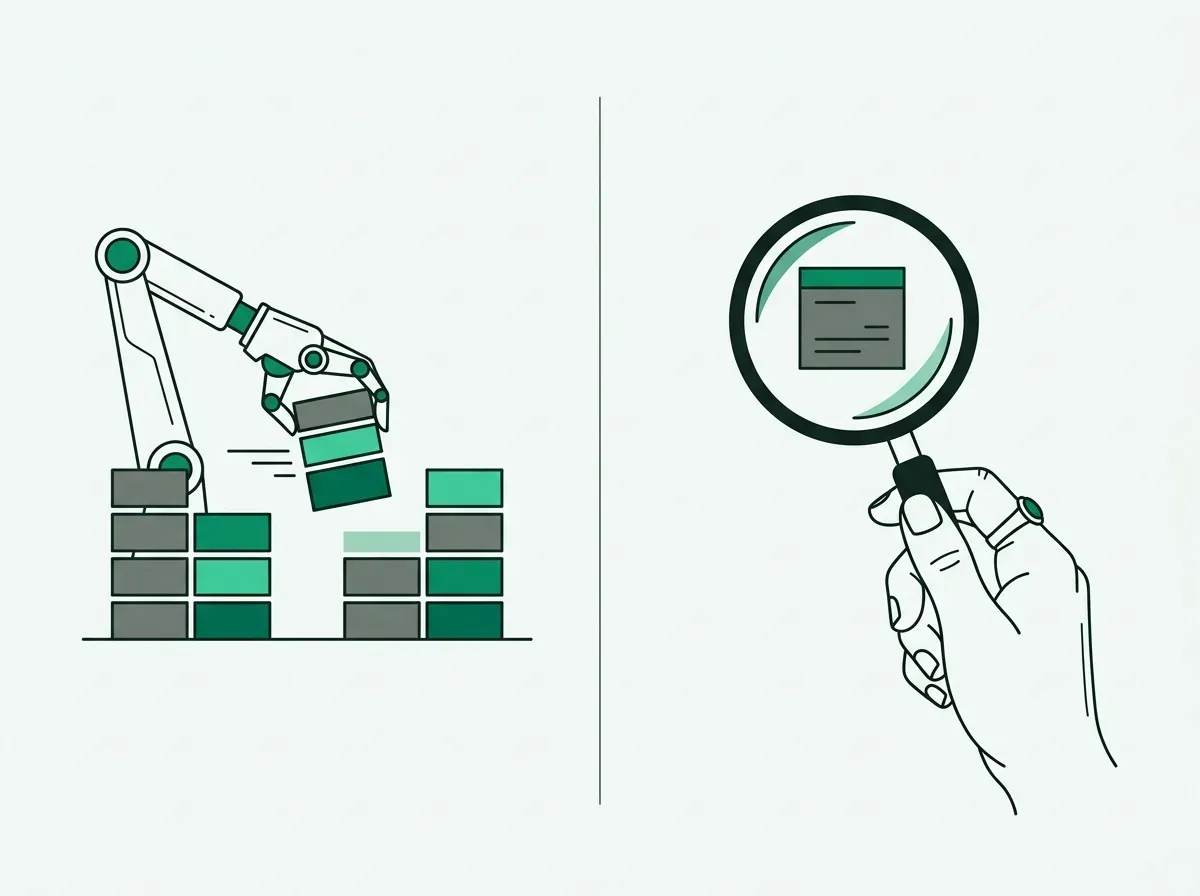
We gave the same brief to Drevon and a contract SDR with five years of experience. We started the clock for both at the same time on a Tuesday morning. The results show a significant difference in efficiency for the mechanical part of the task.
| Metric | Drevon Agent | Manual SDR |
|---|---|---|
| Time to Completion | 12 minutes | 4 hours, 15 minutes |
| Companies Found | 58 | 51 |
| Email Validity Rate | 96% | 98% |

Time to Completion
Drevon completed the task in 12 minutes. The SDR took 4 hours and 15 minutes, a time that aligns with industry reports. An SDR can spend between 5 and 16 hours per week on research and list-building; this single task consumed more than half of a standard workday.
List Size and Quality
Drevon returned a list of 58 companies that met the criteria, while the SDR found 51. We spot-checked 20 accounts from each list, and all 40 were valid and correctly matched the brief's requirements. Both methods produced high-quality, relevant results.
Contactability Rate
To measure data accuracy, we verified the provided contact emails for both lists. Drevon's list had a 96% validity rate (a 4% bounce rate), and the SDR's had a 98% validity rate (a 2% bounce rate). Both are well within the healthy range for cold outreach, which is typically under 5%. The SDR's slightly higher accuracy reflects extra time spent on manual, contact-by-contact verification, a step that Drevon does not perform by default.
What Drevon Missed: The SDR's Edge
Quantitative data does not capture the full picture. The SDR's qualitative analysis provided a layer of nuance that an automated agent currently cannot. Here is exactly what the SDR found that Drevon's initial pass missed:
- Semantic Interpretation: The SDR identified three promising companies where the job title was not an exact match (e.g., 'Growth Lead') but the job description clearly indicated it was a 'first marketer' role. This required reading and interpreting unstructured text.
- Risk Assessment: The SDR flagged two companies that, while technically fitting the ICP, had recent negative press coverage. This external context suggested they might not be receptive targets at this moment.
- Qualitative Enrichment: The SDR added short, qualitative notes on company culture based on their 'About Us' pages and mission statements, suggesting different messaging angles for outreach.
Analysis: How to Combine AI Speed with Human Nuance
The data shows a clear path to a more effective GTM motion. Drevon provides massive leverage, reducing a half-day of manual research to under 15 minutes. This is the portion of the job—repetitive, high-volume, low-signal work—that contributes heavily to the 40% annual turnover rate among SDRs. By automating this mechanical work, a growth team can run dozens of prospecting experiments per week, not just one or two.
The SDR provides a crucial layer of qualitative analysis and strategic inference that AI cannot yet replicate. The most effective workflow is not replacement, but partnership. Use an agent like Drevon to generate the initial, broad list in minutes. Then, have an SDR spend 30-60 minutes enriching that list with human insight—verifying non-obvious job titles, filtering based on current events, and tailoring the messaging approach.

Run Your Own Comparison
This experiment shows how to make a go-to-market team more effective. By automating the 80% of prospecting that is mechanical, you free up human experts to focus on the 20% that requires strategy, empathy, and nuance. This combination allows you to cover more ground with higher quality outreach. You can build and run your first Drevon agent in minutes.